
Carrera y Carrera Jewelry






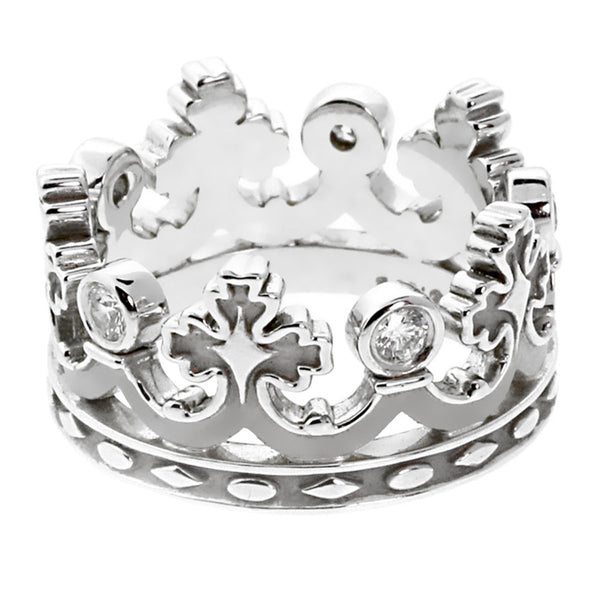
In 1960, the Spanish royal family commissioned Carrera y Carrera to make the wedding tiara for Fabiola de Mora y Aragón for her marriage to King Baudouin of Belgium. That commission established the Madrid house as an international name. Twenty years later, their jewelry was in the Waldorf Astoria. Two decades after that, a sculpture was in the Kremlin’s Armoury Chamber. No other Spanish jewelry house has that record.
Opulent Jewelers — Authenticated Pre-Owned Carrera y Carrera JewelryCarrera y Carrera — 140 Years of Spanish Sculptural Jewelry
Carrera y Carrera is the oldest and most decorated fine jewelry house in Spain, with origins in a lapidary workshop opened in Madrid’s Barrio de las Letras — the historic quarter of writers and artists — by Saturio Esteban Carrera in 1885. Saturio was a student of lapidary, the craft of cutting and polishing gemstones, and he established a workshop that passed through generations: to his son José, who studied goldsmithing in Paris before returning to Madrid; to José’s four nephews, whom he tutored in the family’s techniques; and finally to Saturio’s great-grandsons Manuel and Juan José Carrera, who established the Carrera y Carrera brand as it is recognized today in the 1970s.
The defining moment in the house’s international reputation came in 1960, when the Spanish royal family commissioned Carrera y Carrera to produce the bridal tiara for Fabiola de Mora y Aragón for her marriage to King Baudouin I of Belgium. The commission established Carrera y Carrera on the world stage. By 1977, Manuel Carrera was presenting at Baselworld in Switzerland — the world’s most prestigious jewelry and watch fair. By 1979, Carrera y Carrera had launched in the United States at the Cellini boutique in the Waldorf Astoria hotel in New York City. The house subsequently presented US President Ronald Reagan with “El Rodeo,” an allegorical silver and calcite sculpture that became an exhibit at the White House Museum, and in 2002 a significant piece from the house’s private collection was displayed at the Armoury Chamber in the Kremlin in Moscow.
The design philosophy Manuel Carrera established is specific and unambiguous: large-scale sculptural pieces with an artistic sensibility, drawing from mythology, nature, and Spanish cultural heritage. Animal figures — panthers, serpents, horses, elephants — rendered in 18-karat gold with precious stones. Las Manos, the house’s most iconic original motif: a woman’s hand, its fingers extended, holding a gemstone. Sierpes serpent necklaces that coil around the neck in 18-karat gold. Círculos de Fuego circles of gold and fire. These are not conservative interpretations of standard fine jewelry categories — they are sculpture in precious metal, wearable works of art from a tradition that has no direct equivalent outside of Madrid.
At Opulent Jewelers, our pre-owned Carrera y Carrera collection is sourced from private estates and consignors across the United States. Every piece is authenticated before listing and priced honestly against current secondary market conditions.
Carrera y Carrera Jewelry Collections
Las Manos — The Hands Collection
The most distinctive and most specifically Carrera y Carrera design in the house’s history. Las Manos renders a woman’s hand — fingers extended, wrist curved, every knuckle and nail detailed — in 18-karat yellow gold, holding or presenting a significant gemstone: a ruby, an emerald, a large diamond, or a colored stone of theatrical scale. The hand is not a support structure for the stone; it is the subject of the piece, and the stone is its purpose. The concept has no equivalent in any other fine jewelry house. Las Manos pieces exist in ring form, pendant form, and as standalone sculptural objects. They are the most collected Carrera y Carrera pieces on the secondary market and the works most directly associated with the house’s singular design identity.
Bestiario, Sierpes & Animal Figures
Animal forms are the other central pillar of Carrera y Carrera’s design language. Bestiario pieces include panther rings where the feline wraps the finger in articulated gold; Sierpes serpent necklaces that coil in 18-karat gold with emerald or ruby eyes; elephant pendants; tiger head rings with diamond-pavé coats and gemstone eyes; and horse pieces from the Ecuestre collection. Each animal is rendered with the detail of a sculptor working in a traditional medium — the texture of fur, the articulation of joints, the tension of a coiled body — executed in gold and stones. These are the most theatrically dramatic pieces the house produces and among the most actively collected Carrera y Carrera formats on the secondary market.
Círculos de Fuego, Aqua & Diamond Pieces
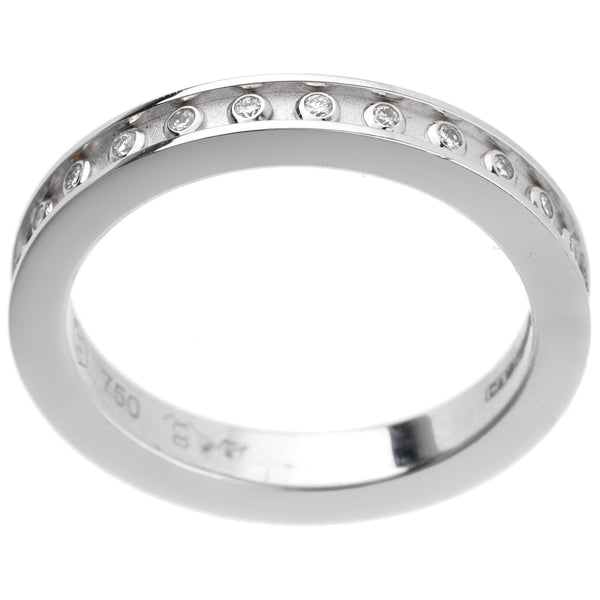
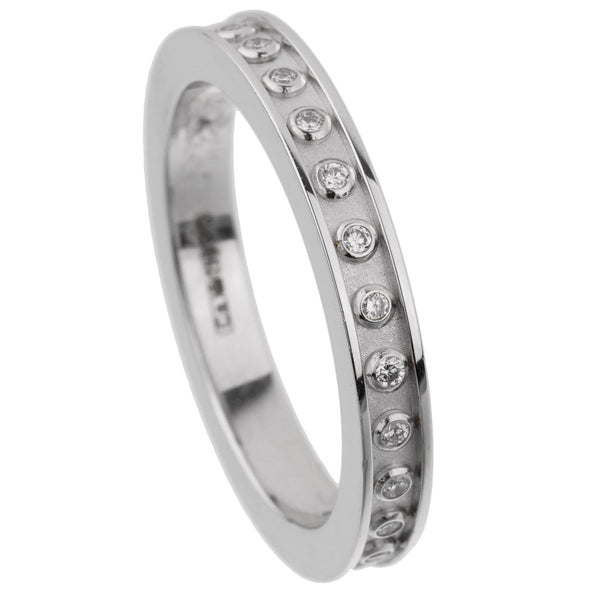
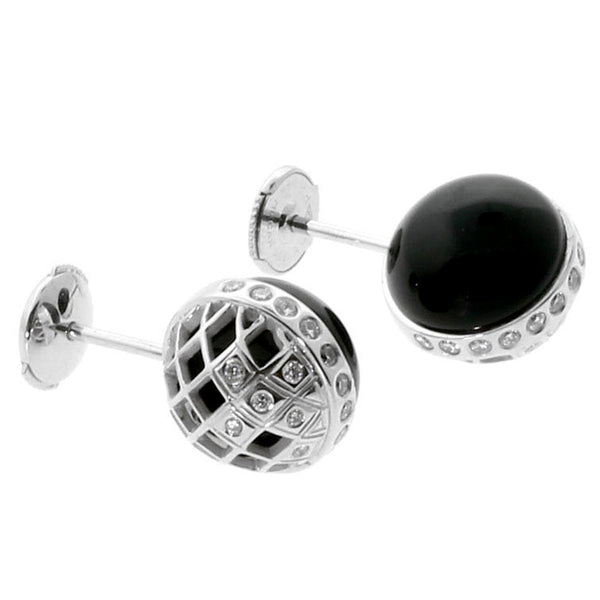
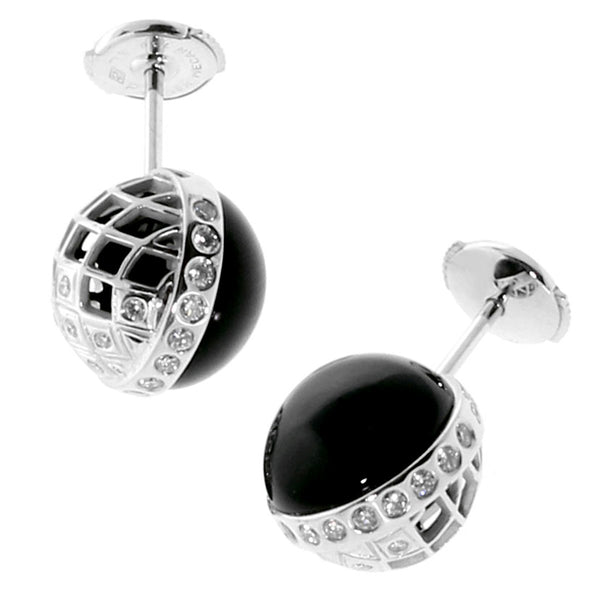
Círculos de Fuego — “circles of fire” — uses concentric rings of 18-karat gold with the house’s signature high-polish finish, available with and without diamond accents. Aqua produces flowing forms in 18-karat white gold with diamond pavé, suggesting water in motion. Both represent a more wearable, more classically accessible expression of the Carrera y Carrera aesthetic than the figurative Las Manos and Bestiario lines. The house also produces diamond eternity bands and classical fine jewelry pieces in 18-karat white gold — carrying Spanish hallmarks and the maker’s mark alongside the technical precision of a workshop with 140 years of goldsmithing history.
The Only Spanish Fine Jewelry House With a 140-Year Record
Carrera y Carrera occupies a specific and largely uncontested position in fine jewelry: it is the Spanish house. France has Cartier, Van Cleef & Arpels, and Boucheron. Italy has Bvlgari and Pomellato. Spain has Carrera y Carrera. That position is not primarily a marketing claim — it is a reflection of a 140-year history that includes royal commissions for Belgian and Spanish royalty, White House presentations, Kremlin exhibitions, and the official ring of Spain’s equivalent of the Academy Awards. The house’s figurative design philosophy — Las Manos, Bestiario, Sierpes — has no equivalent in any other fine jewelry house. The sculptural scale and ambition of the work places it closer to goldsmithing as a fine art than to jewelry design as a commercial category.
On the secondary market, Carrera y Carrera pieces are underrecognized relative to their quality and historical significance — particularly in the United States, where the house has a smaller retail footprint than the French and Italian houses that dominate American luxury jewelry retail. This is the secondary market opportunity: pieces made by a 140-year-old Spanish royal jeweler, in 18-karat gold with significant gemstones, at prices that reflect their current American recognition rather than their craftsmanship or their place in fine jewelry history. Collectors who know the house, and buyers encountering it for the first time at our prices, consistently find that the gap between value and price is larger here than almost anywhere else in the pre-owned luxury jewelry market.
What We Verify on Every Pre-Owned Carrera y Carrera Piece
Carrera y Carrera jewelry carries Spanish gold hallmarks and the house’s specific maker’s mark. The sculptural complexity of Las Manos and Bestiario pieces requires assessment beyond hallmark verification — the articulation quality, stone security in complex settings, and surface finish of genuine Carrera production are all specific and verifiable.
Genuine Carrera y Carrera pieces carry the Spanish gold hallmark confirming 18-karat gold (750 purity, marked as “AU750” or the Spanish eagle mark on older pieces) alongside the Carrera y Carrera maker’s mark. Both are verified under magnification. The maker’s mark format has evolved across the house’s production periods and is cross-checked against the piece’s other characteristics for period consistency.
Las Manos hand pieces and Bestiario animal figures are assessed for the specific construction quality of Carrera y Carrera’s Madrid workshop production: the detail of hand-modeled gold surfaces, the articulation quality of jointed animal pieces, and the precision of stone settings within complex three-dimensional forms. The house’s surface finishing — the specific high-polish and satin-finish combinations that define its aesthetic — is a verifiable production characteristic.
Gemstones in Carrera y Carrera figurative pieces — emerald and ruby eyes in Bestiario animals, the significant center stones in Las Manos pieces, diamond pavé in Círculos de Fuego and Aqua — are assessed individually for stone security, quality, and condition. Complex bezel, prong, and pavé settings in sculptural gold are examined for stone movement and setting integrity. Missing stones, loose settings, and chips in significant stones are always disclosed and reflected in pricing.
Surface finish condition on Carrera y Carrera pieces is graded honestly — the house’s polished gold surfaces show wear more visibly than textured surfaces, and the condition of the finish is material to the piece’s presentation and value. Scratches, worn surface areas, and any re-polishing history are disclosed. We do not photograph pieces to conceal surface condition.
Carrera y Carrera Jewelry — What Buyers Ask
Carrera y Carrera is a Spanish fine jewelry house founded in 1885 in Madrid’s Barrio de las Letras by lapidary craftsman Saturio Esteban Carrera. The modern brand was established in the 1970s by Saturio’s great-grandsons Manuel and Juan José Carrera. The house is recognized as one of the thirty most prestigious fine jewelry firms in the world and is distinguished by its sculptural, large-scale designs drawing from mythology, nature, and Spanish cultural heritage. Its most iconic works include Las Manos — a woman’s hand holding a gemstone rendered in 18-karat gold — and the Bestiario animal figure collection including serpent, panther, horse, and elephant pieces. The house produced the 1960 wedding tiara for Queen Fabiola of Belgium and designs the official ring for Spain’s Goya Awards. Browse our current Carrera y Carrera collection to see what is available.
Las Manos — “The Hands” in Spanish — is Carrera y Carrera’s most iconic and most specifically original design concept. The collection renders a woman’s hand in 18-karat yellow gold at detailed sculptural scale — every finger articulated, every knuckle modeled — holding or presenting a significant gemstone: a ruby, emerald, diamond, or colored stone of substantial size. The hand is not decorative framing for the stone; it is the primary subject, and the gem is its reason for existing. The concept has no equivalent in any other fine jewelry house globally. Las Manos pieces appear as rings (the hand emerges from the band), pendants, and standalone sculptural objects. They are the most collected and most identifiable Carrera y Carrera pieces on the secondary market.
The original Carrera y Carrera company went through judicial liquidation in 2019. The brand has since been relaunched and the official Carrera y Carrera website currently operates with a new Madrid flagship boutique. For buyers of pre-owned pieces, the liquidation period is actually significant context: original production pieces from the house’s most artistically significant decades — the 1970s through 2010s — are now only available through the secondary market, and the finite supply of those original workshop pieces makes well-preserved examples with intact hallmarks more valuable over time, not less. Every Carrera y Carrera piece at Opulent Jewelers is an original production piece from the house’s history, authenticated before listing.
Sierpes — Spanish for “serpents” — is one of Carrera y Carrera’s most celebrated Bestiario designs. The collection renders serpents in 18-karat gold at wearable scale: necklaces where the snake coils around the neck with its head at the chest, rings where the serpent wraps the finger, and bracelets where the body spirals around the wrist. The snake is modeled with the surface texture of scales, the articulation of a body in motion, and eyes set with rubies or emeralds. The Sierpes collection is named after a famous street in Seville — Calle Sierpes — and is among the house’s most theatrically dramatic designs. Pre-owned Sierpes necklaces and rings in excellent condition with intact stone eyes are among the most actively collected Carrera y Carrera pieces on the secondary market.
Genuine Carrera y Carrera pieces carry the Spanish gold hallmark confirming 18-karat gold alongside the Carrera y Carrera maker’s mark, typically engraved on the interior of a ring shank, the back of a pendant, or the clasp of a necklace. The “CyC” or “Carrera y Carrera” signature appears on the piece. The quality of the sculptural work is itself an authentication indicator — genuine Carrera y Carrera gold work has a surface detail and finish quality that is difficult to replicate; the modeling of Las Manos hands and Bestiario animals is specific to the house’s Madrid workshop. Every piece we list has been verified against hallmarks, maker’s mark, and construction quality before entering our collection.
Secondary market pricing for Carrera y Carrera pieces varies significantly by collection, complexity, gold weight, and gemstone content. Círculos de Fuego and Aqua pieces in 18-karat white gold typically range from $800 to $3,500 depending on diamond weight and format. Las Manos pieces — where pricing is driven by both the gold weight and the quality of the center stone — range from approximately $2,000 to $15,000+. Bestiario figurative pieces range from approximately $1,500 for smaller animal motif pieces to $8,000+ for significant Sierpes serpent necklaces and panther ring formats with major stone eyes. Diamond eternity bands and classical pieces range from $700 to $4,000 depending on stone weight. All pricing reflects current secondary market conditions and is honest about condition. Original Carrera y Carrera boxes and papers add value when present.
Carrera y Carrera’s celebrity clientele has been international across its history. The house produced the 1960 wedding tiara for Queen Fabiola of Belgium and has been associated with Queen Sofía of Spain across several decades. In the United States, Jennifer Lopez, Demi Moore, Katy Perry, Lady Gaga, Sofía Vergara, and Madonna have all worn Carrera y Carrera jewelry. The house presented US President Ronald Reagan with “El Rodeo,” a silver and calcite sculptural piece now in the White House Museum collection, and a major Carrera y Carrera work was exhibited at the Armoury Chamber in the Kremlin in 2002. The house designs the official ring for Spain’s Goya Awards — the Spanish Academy of Motion Picture Arts and Sciences’ equivalent of the Oscar — and the Golden Eagle Award for Russia’s equivalent. This is an institutional client list that spans royal families, heads of state, and major film academies on two continents.
Círculos de Fuego — “Circles of Fire” in Spanish — is Carrera y Carrera’s most widely recognized contemporary collection. The design uses concentric rings of 18-karat gold with a high-polish finish that creates an optical depth effect, available with and without diamond accents. The collection is produced as rings, earrings, bracelets, and necklaces in a format more classically wearable than the house’s figurative Las Manos and Bestiario lines. It represents the more accessible, more gift-oriented end of the Carrera y Carrera range while maintaining the house’s commitment to finish quality and craftsmanship. Círculos de Fuego pieces are among the most commonly encountered Carrera y Carrera designs on the secondary market.
Carrera y Carrera jewelry was made in the house’s Madrid workshops, with the primary production facility located in San Agustín del Guadalix in the Madrid region, which opened in 1992. The house has operated continuously in Madrid since Saturio Carrera’s original workshop in the Barrio de las Letras in 1885. The sculptural pieces — Las Manos hands, Bestiario animals — are hand-modeled and finished by craftsmen in these workshops; the complexity of the figurative work requires hands-on construction that cannot be mechanized. This is a genuine handmade tradition in the specific sense of that phrase: the work is done by trained goldsmiths using traditional techniques alongside modern stone-setting methods.
Yes. We purchase Carrera y Carrera pieces outright and accept pieces on consignment across all collections — Las Manos hand pieces, Bestiario animal figures, Sierpes serpent pieces, Círculos de Fuego, Aqua, Gardenias, diamond bands, and estate pieces. Stone security in complex figurative settings is verified on every piece. Surface condition is assessed honestly. Spanish hallmarks and maker’s mark presence are confirmed. Original Carrera y Carrera boxes and papers factor into our offer. Reach out through our consignment inquiry page to get started.