
Pre-Owned Luxury Jewelry
Bvlgari Bracelets


Bvlgari Bvlgari Carnelian Mother of Pearl 18k Rose Gold Cuff Small Bangle


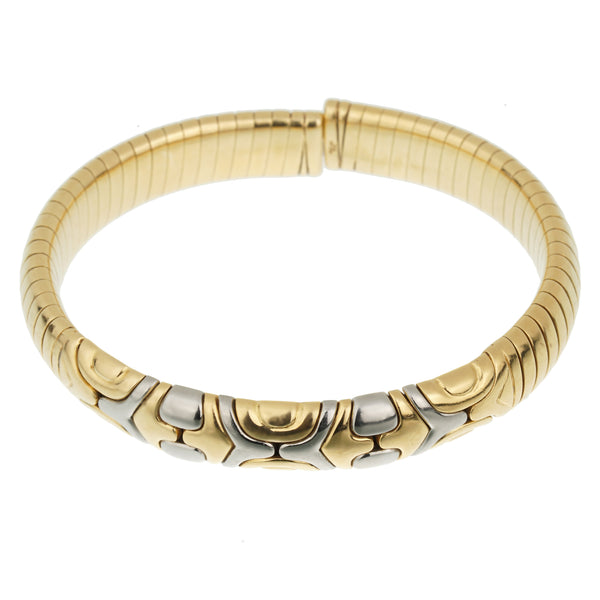
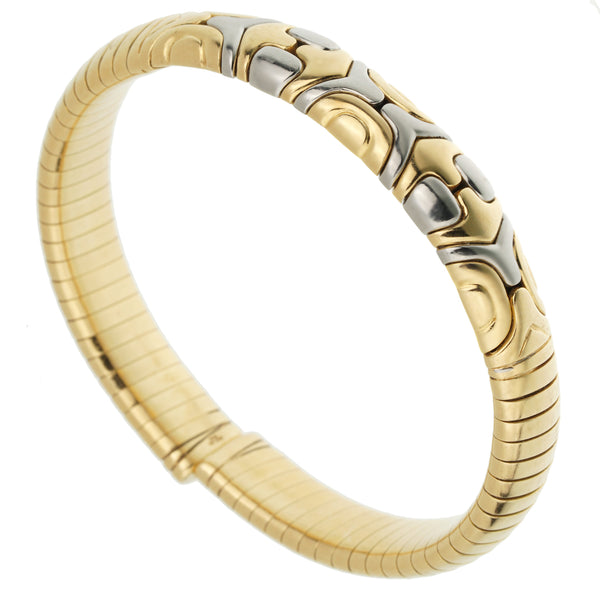


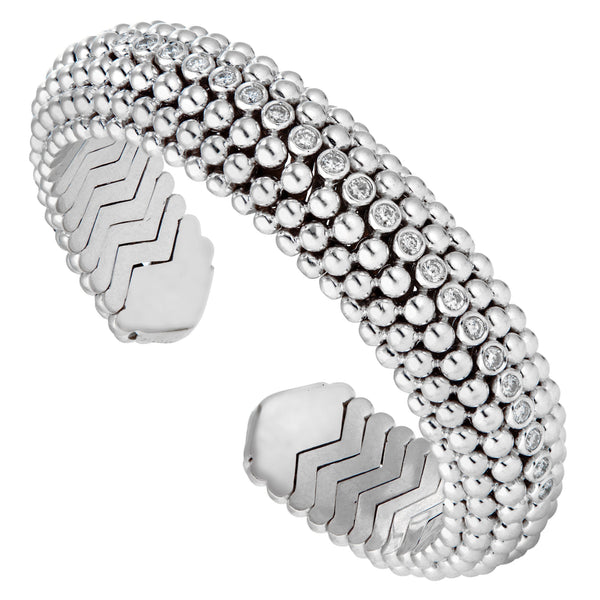
Bvlgari Dolce Vita 1950's Beaded Spiga Diamond 18k White Gold Cuff Bracelet

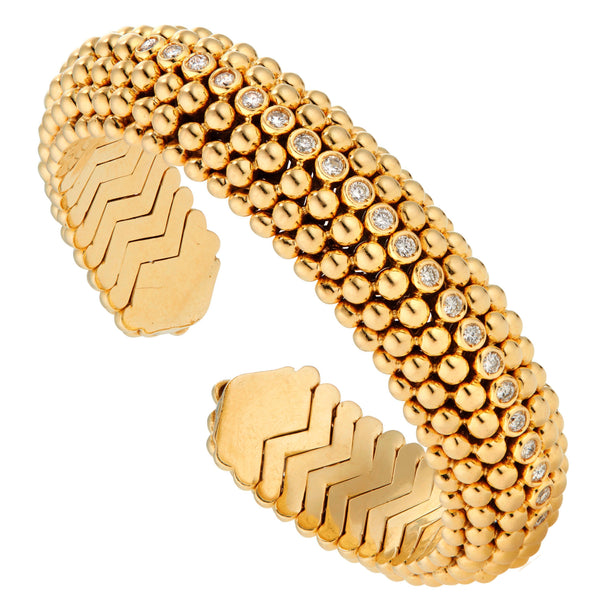
Bvlgari Dolce Vita 1950's Beaded Spiga Diamond 18k Yellow Gold Cuff Bracelet

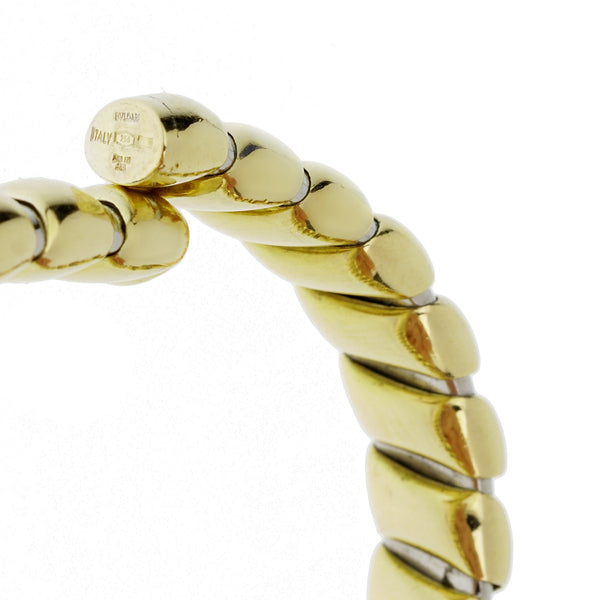
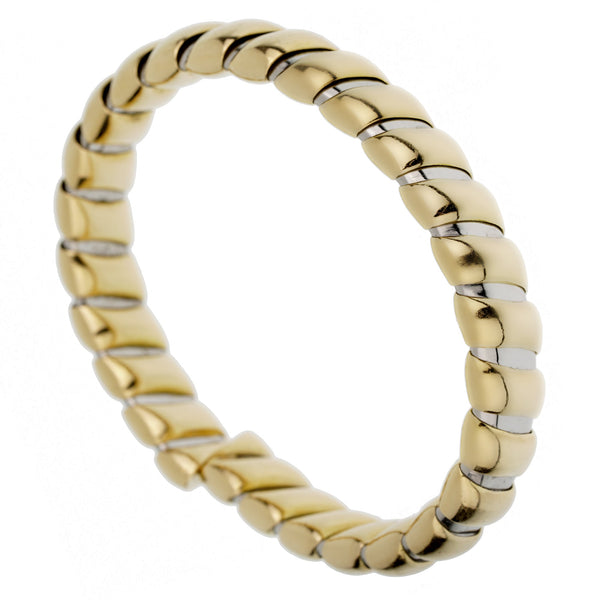

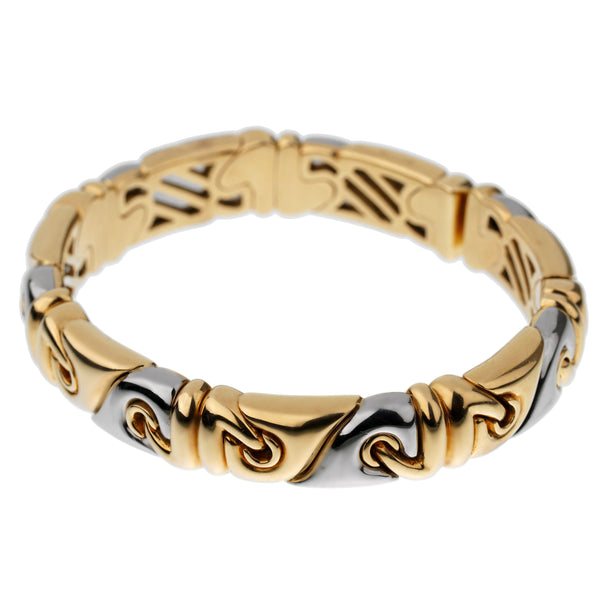
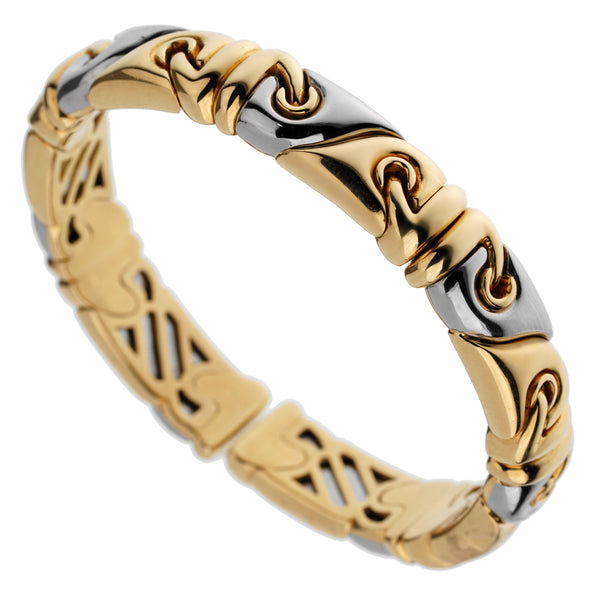

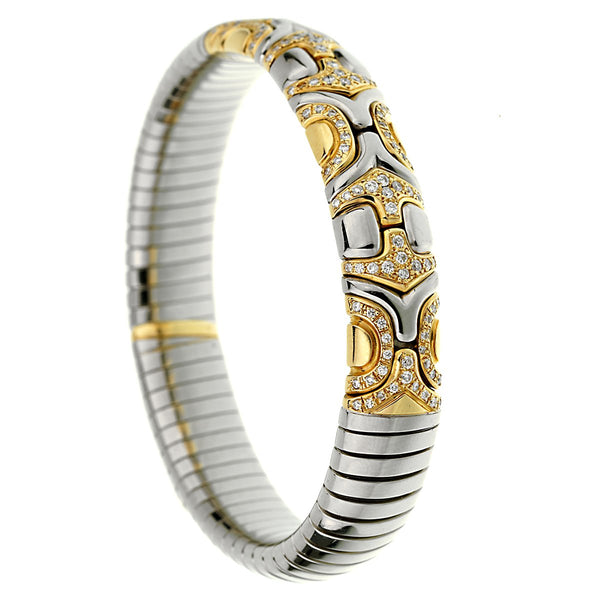
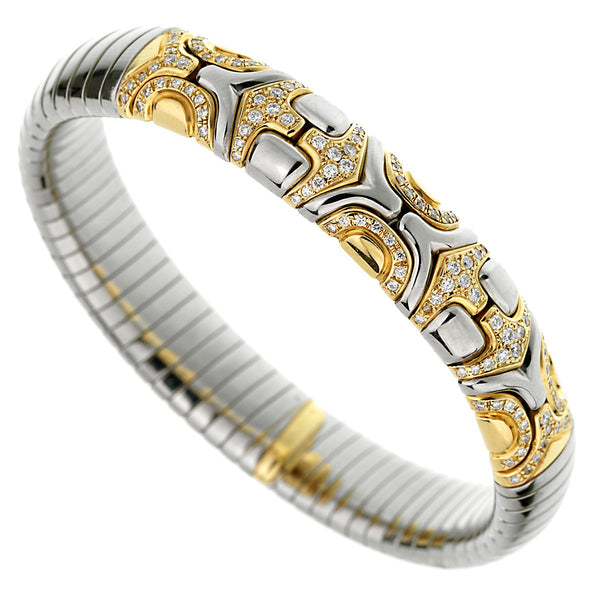
Pre-Owned Bvlgari Bracelets
The Serpenti, the B.zero1, the Tubogas — each one a different answer to the same Italian question: how much can a bracelet say?
Bvlgari Makes Bracelets Differently
Most jewelry houses design bracelets as an extension of their other work — a ring motif enlarged, a necklace element repeated at the wrist. Bvlgari has always treated the bracelet as a primary creative statement. The Serpenti coils around the wrist the way the original ancient Roman snake ornaments did — not as decoration but as presence. The Tubogas wraps in the same gas-pipe technique Bvlgari first mastered in the 1940s, a construction so particular that it remains genuinely difficult to replicate. The B.zero1's spiral multi-band structure references the ancient Colosseum and wears with a fluidity that no rigid bangle achieves.
These are not pieces designed to sit quietly. Bvlgari bracelets command the wrist — and they have done so on the wrists of Elizabeth Taylor, who owned more Bvlgari than almost any collector in history, Audrey Hepburn, and generations of women who understood that Roman boldness has never gone out of style.
We've been sourcing Bvlgari jewelry from private estates for over fifteen years. In that time we've learned which pieces are genuinely rare, which configurations are most sought, and which details to look for when verifying that what we're handling is the real thing. Every bracelet in our collection has been through that process before it reaches you.
Browse the pieces available above, or read on for a guide to the collections — what distinguishes each one, what to look for, and what makes Bvlgari bracelets worth acquiring on the secondary market.
A Guide to Bvlgari's Bracelet Collections
The Serpenti Bracelet
The snake has been a Bvlgari motif since the 1940s, when the house began making flexible coil bracelets in gold that wound around the wrist in the manner of ancient Roman serpent ornaments. The Serpenti has taken many forms since then — the sinuous articulated scale-link version with a diamond and gemstone-set head, the enamelled Tubogas-inspired coil, the structured cuff with the snake motif relief-set in gold — but the essential idea has never changed: a bracelet that feels alive on the wrist.
The pieces most avidly collected on the secondary market are the vintage mid-century examples from the 1950s and 1960s, when Bvlgari's artisans were producing scale-work of genuinely exceptional quality, and the more recent Serpenti Viper iterations in 18-karat gold with pavé diamond settings. The snake-head design varies considerably across eras; early examples tend to be more sculptural, with gemstone eyes and a hand-finished quality that later industrial production cannot fully replicate.
The B.zero1 Bracelet
Introduced in 1999 and designed by Anish Kapoor in collaboration with Bvlgari's design team, the B.zero1 is one of the most architecturally original fine jewelry designs of the past thirty years. The collection takes its visual language from the cross-section of the Colosseum — the concentric rings, the structural repetition, the sense of ancient Roman engineering made personal — and builds it into a spiral multi-band form that compresses three or four rings of 18-karat gold into a single fluid bangle.
The B.zero1 bracelet comes in one-band, three-band, and four-band configurations, in yellow, white, and rose gold, with and without pavé diamond edges. The three-band version in yellow gold is the most consistently traded on the secondary market and the most immediately recognizable configuration. The bracelet's genius is structural: it looks rigid but moves. It feels heavy but wears lightly. It is a piece that rewards extended ownership — the more you wear it, the better you understand what it is doing.
The Tubogas Bracelet
The Tubogas technique — named for the flexible metal gas pipe it resembles — was mastered by Bvlgari in the 1940s and has been the house's most distinctive construction method ever since. The technique involves weaving thin strips of gold into a continuous, self-supporting coil without any solder or links — the structure holds itself together through the tension of the weave. The result is a bracelet that is simultaneously flexible and substantial, that coils around the wrist with the quality of something alive, and that has a warmth and weight that no other construction method produces.
Vintage Bvlgari Tubogas bracelets from the 1950s through 1970s are among the most collected Italian jewelry pieces in the world. The quality of the gold work in the early examples is exceptional — wide, flat Tubogas bangles in 18-karat yellow gold from this period are genuinely difficult to find in excellent condition, and command premium prices when they appear. More recent Bvlgari Tubogas pieces in yellow gold with pavé diamond inserts represent accessible entry points to the tradition.
The Divas' Dream Bracelet
The Divas' Dream collection draws its visual language from the fan-shaped mosaics of the ancient thermal baths of Caracalla in Rome — the peacock-tail geometry that the Romans used as architectural decoration, translated by Bvlgari into 18-karat gold and pavé diamonds as jewelry. The Divas' Dream bracelet is the collection's most fluid piece: a series of fan-shaped elements articulated together in a graduated line around the wrist, each fan set with diamonds and connected by a fine gold chain that allows the piece to move naturally against the skin.
The Divas' Dream is a more feminine and decorative design language than the Serpenti or B.zero1, and it attracts a different collector — one drawn to the house's ability to make ancient geometry feel contemporary, to find formal beauty in architectural pattern. In rose gold with pavé diamonds, it is one of the most photographed Bvlgari bracelet configurations in the current secondary market.
The Monete Bracelet
The Monete collection incorporates actual ancient Roman coins — authenticated archaeological pieces — set into 18-karat gold bracelet frames alongside carved intaglios and semi-precious stones. This is not a simulation of ancient jewelry; it is ancient and contemporary jewelry literally fused. The coins are genuine, typically dating from the 1st century BCE through the 3rd century CE, and each piece carries documentation of the coin's provenance.
Bvlgari has been collecting and incorporating ancient coins into jewelry since the 1960s, and the Monete collection represents that tradition in its most refined contemporary form. The bracelet format — typically a wide gold bangle with a central coin element flanked by carved stones — is among the most compelling expressions of Bvlgari's central philosophy: that fine jewelry exists in a continuous conversation with the ancient world, and that Roman heritage is not a historical reference but a living design source.
What We Check on Every Bvlgari Bracelet
Bvlgari is one of the most frequently imitated luxury jewelry brands in the world — the Serpenti in particular has been copied at every quality level from obvious tourist replicas to sophisticated fakes with convincing hallmarks. After fifteen years of handling Bvlgari pieces from private estates, we know what to look for. Here is the physical evidence we require before any bracelet is listed.
Signature & Hallmarks
Genuine Bvlgari pieces carry the "BVLGARI" signature — always spelled with a V, never a U, as Latin inscription demands — alongside the Italian gold hallmark (750 for 18-karat), and typically a reference number. We examine engraving depth, character spacing, and placement under magnification. The signature on authentic pieces has a specific weight and consistency; copies almost always show irregularities on close examination.
Construction Quality
Bvlgari's construction standards are specific to each collection. Tubogas weave uniformity, B.zero1 spiral compression, Serpenti articulation — each has characteristics that are consistent across genuine production and distinguishable from imitation on handling. We assess construction quality physically, not from photographs alone. Weight, movement, and tactile finish are as diagnostic as visual inspection.
Metal Testing
Gold purity is tested on every piece. An 18-karat Bvlgari bracelet has a weight and density that gold-plated or gold-filled alternatives cannot match. The B.zero1's characteristic heft comes from the mass of solid 18-karat gold in the spiral construction — lighter than expected means the metal content is wrong. We identify this immediately on the scale before any further examination.
Stone & Setting Verification
Diamond-set Bvlgari bracelets — Serpenti with pavé, B.zero1 diamond edges, Divas' Dream fan elements — receive gemological examination. Stone security, setting depth, and the consistency of the diamond selection are all examined. Bvlgari uses high-quality stones in its production lines, and the setting work reflects that. Stones loose in their settings, uneven coverage, or inconsistent cutting quality are all indicators that warrant rejection.
Fifteen Years of Sourcing Bvlgari
We have been buying and selling authenticated Bvlgari jewelry from private estates since the business began. That experience has given us a working knowledge of the collection that general resellers don't have — which pieces are genuinely rare, which configurations are most liquid, which eras of production are most desirable, and what condition issues are acceptable versus what to pass on. We are selective about what we list, which is why we can stand behind everything we sell.
- Every piece physically authenticated before listing
- Honest, specific condition grading — not marketing language
- Serpenti, B.zero1, Tubogas, Divas' Dream regularly sourced
- Vintage mid-century pieces acquired when they become available
- Original Bvlgari boxes and papers transferred when present
- Complimentary cleaning before shipment, insured on every order
Bvlgari Bracelets — What Buyers Want to Know
What is the price of a pre-owned Bvlgari bracelet?
Pre-owned Bvlgari bracelet prices vary considerably by collection, configuration, metal, and condition. A B.zero1 three-band bracelet in 18-karat yellow gold without diamonds typically trades between $2,800 and $4,500 in the secondary market — the same piece retails new at approximately $5,200. A Serpenti Viper bracelet in 18-karat gold with diamond pavé head runs $6,000 to $12,000 depending on the stone weight. Vintage mid-century Tubogas pieces are more variable — a wide yellow gold Tubogas bangle in excellent condition from the 1960s can command $8,000 to $20,000 depending on the configuration. Contact us at contact@opulentjewelers.com for current pricing on specific pieces.
Which Bvlgari bracelet holds its value best?
The Serpenti and B.zero1 are the most consistently liquid Bvlgari bracelets on the secondary market — both designs have been in continuous production and continuous demand for decades, which means a broad buyer pool and predictable pricing. Vintage Tubogas pieces from the mid-century period are the strongest performers in absolute value retention, often appreciating rather than depreciating, but their liquidity is lower because the buyer pool for serious vintage Italian jewelry is smaller. The B.zero1 in yellow gold is the single most traded Bvlgari bracelet on the global secondary market and offers the most reliable combination of demand and pricing transparency.
Is Bvlgari spelled Bvlgari or Bulgari?
Both spellings refer to the same house. The brand was founded in Rome in 1884 by Greek silversmith Sotirio Boulgaris, whose name was Italianized to Bulgari. When the house began branding its jewelry with Latin script, it adopted the classical Roman spelling — V instead of U — which is why the signature reads BVLGARI. In everyday use both spellings are correct, and both appear consistently in the secondary market. The jewelry itself is always signed BVLGARI.
What is the B.zero1 bracelet?
The B.zero1 is Bvlgari's signature contemporary bracelet, introduced in 1999 and designed in collaboration with sculptor Anish Kapoor. It takes its architectural form from the concentric rings of the Colosseum, compressing multiple bands of 18-karat gold into a single spiral bangle that moves fluidly on the wrist. It is produced in one-band, three-band, and four-band configurations in yellow, white, and rose gold, with and without diamond-set edges. The three-band yellow gold version is the most widely traded on the secondary market. The design's endurance — still in production, still in demand, unchanged in its essential form — is what makes it one of the most reliable value-retention pieces in contemporary signed jewelry.
How do I know if a Bvlgari bracelet is authentic?
The most reliable authentication markers are the BVLGARI signature (V, not U), the Italian 750 gold hallmark, and a reference or serial number — all engraved on the inside or clasp of the bracelet. The signature should be clean, consistently spaced, and evenly engraved; copies almost always show irregularities under magnification. Beyond hallmarks, construction quality is diagnostic: genuine Bvlgari pieces have a specific weight and finish that is consistent across the collection. If you have a piece you'd like assessed, contact our team at contact@opulentjewelers.com before purchasing from any source.
More Bvlgari & Signed Bracelets
The Bvlgari bracelet is a specific pleasure — but the houses that share its Roman roots and its appetite for boldness are worth knowing too.