
Luxury Citrine Jewelry







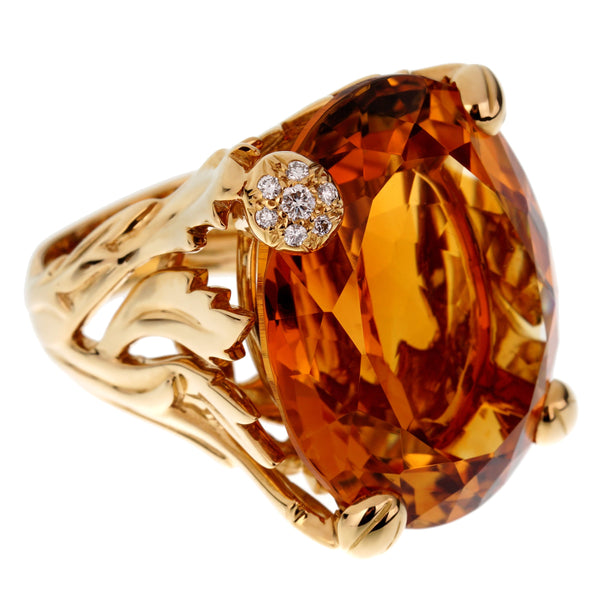
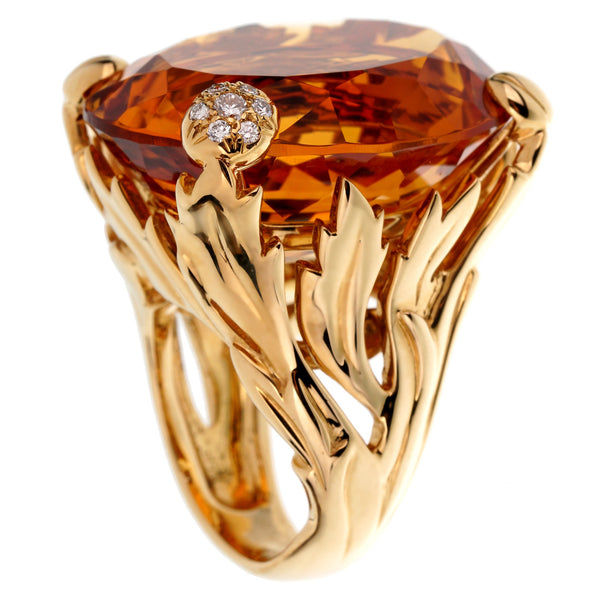







Roman priests fashioned citrine into rings. Ancient Egyptians used it as a talisman. For the 1937 coronation of King George VI, Cartier built a tiara around a 62.35-carat emerald-cut citrine. The stone has been in fine jewelry for two thousand years — it was Art Deco’s defining gemstone — and at the major houses it never left.
Opulent Jewelers — Authenticated Pre-Owned Luxury Citrine JewelryLuxury Citrine Jewelry — The Gemstone of the Art Deco Era at the World’s Greatest Houses
Citrine is a variety of quartz whose name comes from the French citron — lemon — a reference to the stone’s warm yellow-to-amber color range. The word was first used in English in 1385, but the stone was used in fine jewelry far earlier: ancient Egyptians fashioned citrine talismans, ancient Greeks carved images into it, and Roman priests wore citrine rings. The stone’s golden warmth, its excellent transparency, and its durability — a Mohs hardness of 7 makes it well-suited to daily wear — have made it a consistent choice for fine jewelry throughout history.
The defining period for citrine in luxury jewelry was the Art Deco era of the 1920s and 1930s, when Hollywood actresses including Greta Garbo and Joan Crawford wore large, elaborate citrine pieces that established the stone’s association with glamour and theatrical scale. The houses followed: for the 1937 coronation of King George VI, Cartier created a tiara centered on a 62.35-carat emerald-cut citrine — a piece that can also be dismounted and worn as a clip brooch. Queen Sirikit of Thailand owns a diamond and citrine tiara. Queen Sonja of Norway received a citrine tiara for her 60th birthday. In 2015, Angelina Jolie donated to the Smithsonian Institution a citrine necklace she designed herself — 64 graduated bezel-set cushion-shaped citrine gems in 18-carat yellow gold with a 177.11-carat pear-cut center stone.
Citrine is also one of the two November birthstones, alongside topaz — a designation formalized by the National Association of Jewelers in 1912. At the major luxury houses, citrine appears most prominently in Pomellato’s color-first Italian collections, Bvlgari’s bold colored stone designs, and Piaget’s Art Deco-influenced estate pieces. At Opulent Jewelers, our luxury citrine collection spans rings, necklaces, and earrings — all individually authenticated, all signed by the houses that made them.
Designer Citrine Jewelry — What We Carry
Pomellato is the luxury house most associated with citrine as a design material. Founded in Milan in 1967 by Pino Rabolini, the house built its international reputation on large, lightly faceted colored gemstones set in 18-karat yellow gold with minimal supporting metal — the stone doing the work, not the setting. Citrine’s warm golden tones are particularly suited to this approach: a large cabochon-cut citrine in Pomellato’s characteristic yellow gold surround has an immediate, specific Italian fine jewelry identity. Pomellato’s Nudo collection — the prong-free setting that placed the stone at the center without structural interference — includes citrine versions that are among the most collected Pomellato formats on the secondary market. Lola earrings with cabochon citrine, Sassi pieces, and vintage Pomellato citrine hoop earrings with multiple cabochon stones are among the most actively searched pre-owned Pomellato formats.
Bvlgari’s approach to colored gemstones is characteristically Roman — bold, large, and unafraid of color contrast. The Aqua collection uses citrine alongside blue topaz in 18-karat white gold with diamond accents: the warm amber of the citrine against the cool blue of the topaz creates a specific visual contrast that no other house employs in quite this way. The Pyramid collection uses faceted citrine in geometric settings. Vintage Bvlgari citrine pieces — large cabochon citrine rings and pendant necklaces from the 1970s and 1980s in yellow gold — represent some of the most significant pre-owned colored gemstone pieces available anywhere in the secondary market.
Piaget’s engagement with citrine reflects the house’s long tradition of using colored gemstones as dial materials and jewelry elements — a tradition dating to 1963, when the house introduced hard stone dials and began applying the same lapidary approach to jewelry pieces. Piaget citrine rings and pieces carry the Swiss 750 gold hallmark and the Piaget maker’s mark alongside the specific construction standards of a house producing exclusively in 18-karat gold since 1957.
Signed Estate Citrine
Beyond these primary houses, our luxury citrine collection includes signed estate citrine jewelry from other major jewelry houses — Chanel, Dior, and other LVMH and Kering brands that have used citrine as a design material. Citrine’s Art Deco associations make pre-owned estate citrine pieces from the mid-20th century particularly interesting for collectors: large faceted citrines in architectural yellow gold settings from this period carry a design authority that no contemporary reproduction can replicate. Every signed piece is verified for house signature and metal hallmarks before listing.
Luxury Citrine Jewelry by Category
Citrine Rings
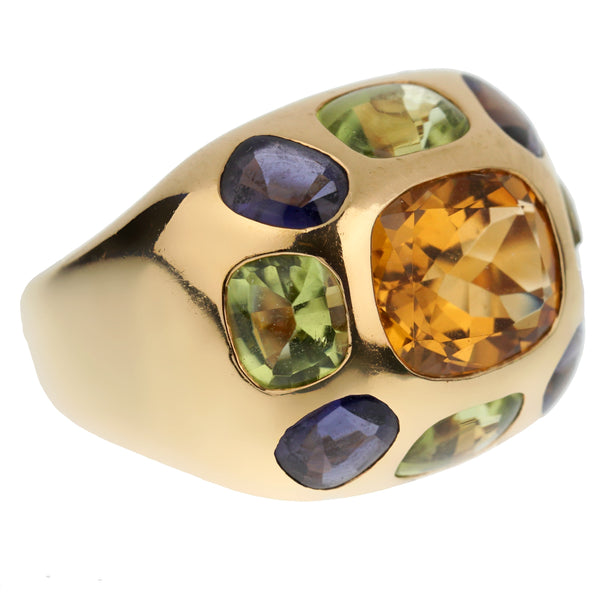
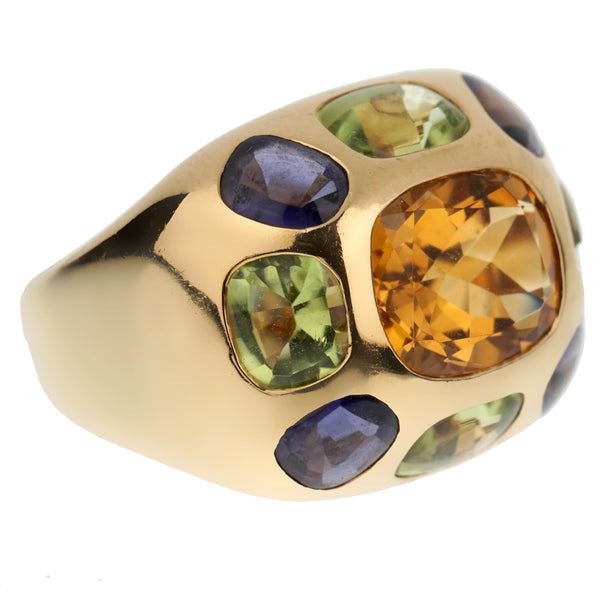
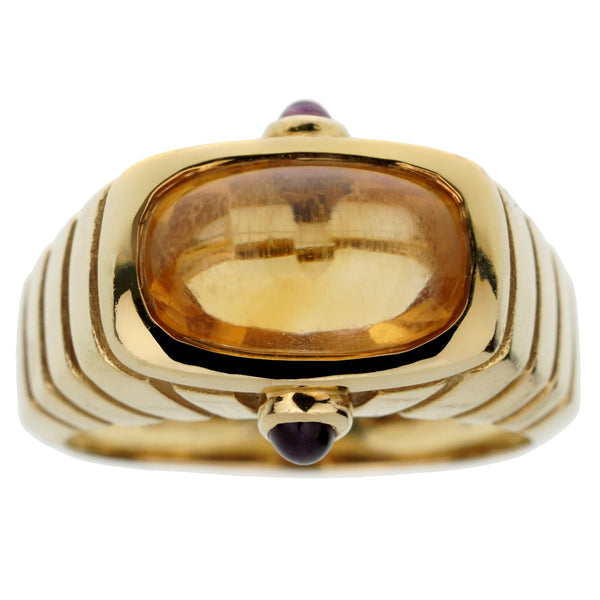
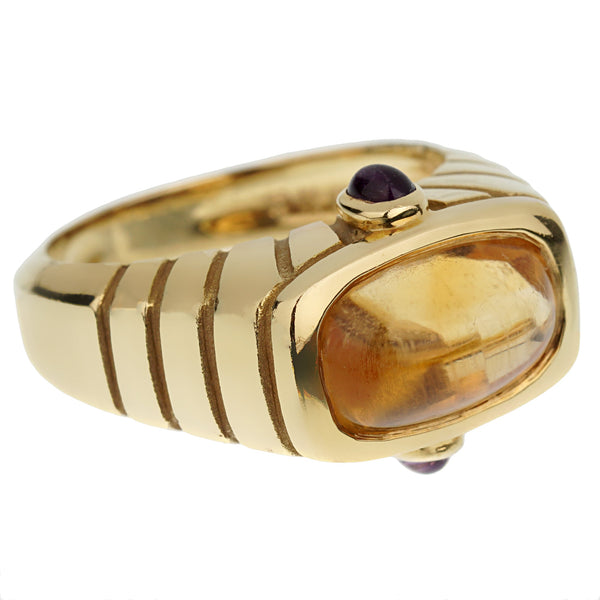
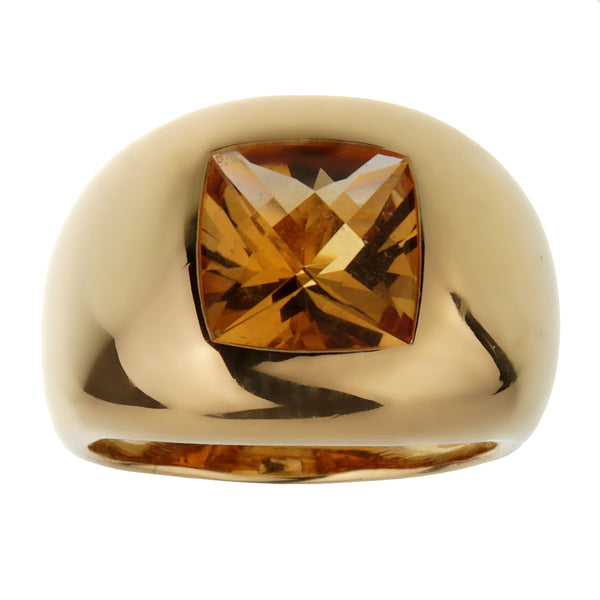
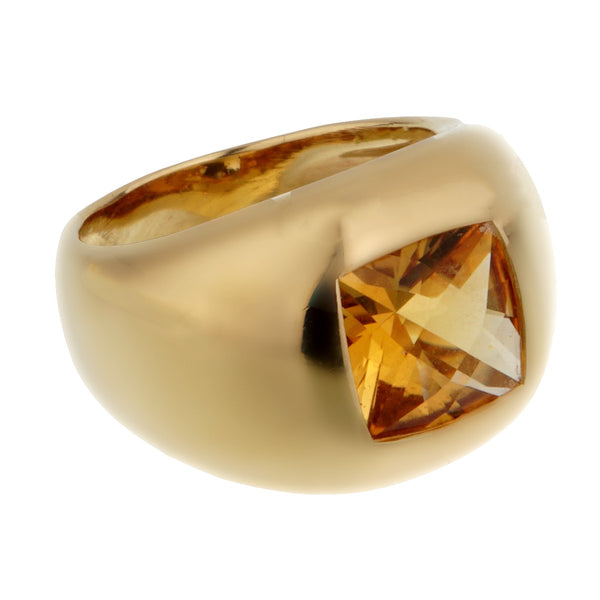
The luxury citrine ring is the format where the stone’s warm golden tone is most immediately visible and most impactful. Pomellato citrine rings — particularly Nudo and cabochon-set formats in 18-karat yellow gold — are the most searched luxury citrine ring format on the secondary market. Bvlgari citrine cocktail rings in yellow gold with large center stones and diamond accents represent the bold end of the spectrum. Estate luxury citrine rings from the Art Deco and Retro periods, where large faceted citrines were set in elaborate architectural yellow gold mounts, are among the most historically significant pre-owned citrine pieces available. Secondary market pricing for luxury citrine rings ranges from approximately $800 to $7,000+ depending on brand, stone size, and condition.
Citrine Necklaces & Pendants
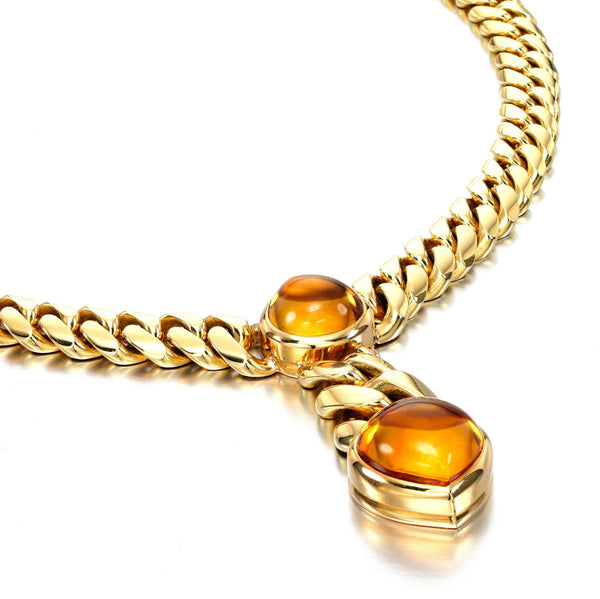
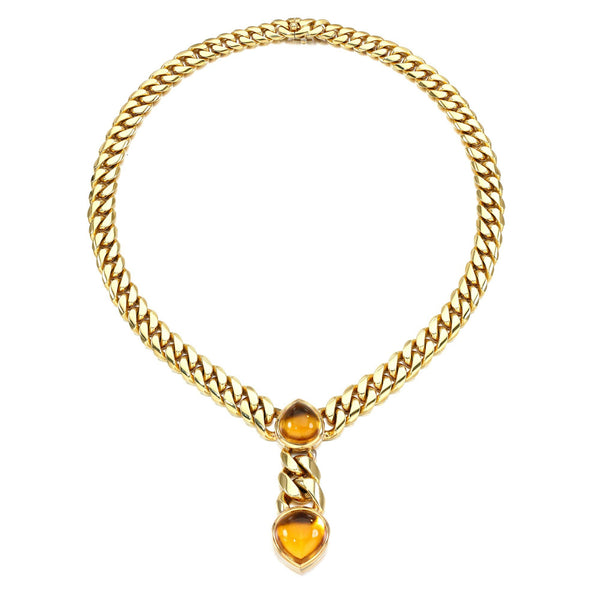
A signed luxury citrine pendant or necklace is the most gift-appropriate format in the citrine category — particularly for November birthdays, where the stone’s birthstone status provides a personal dimension that a generic luxury necklace does not. Pomellato citrine pendant necklaces with the house’s characteristic lightly faceted drops in yellow gold are consistently collected. Bvlgari citrine pendant necklaces in white gold with diamond accents represent the more formally dressed end of the category. Every necklace in our collection has the house signature and metal hallmarks verified and the stone security assessed before listing.
Citrine Earrings
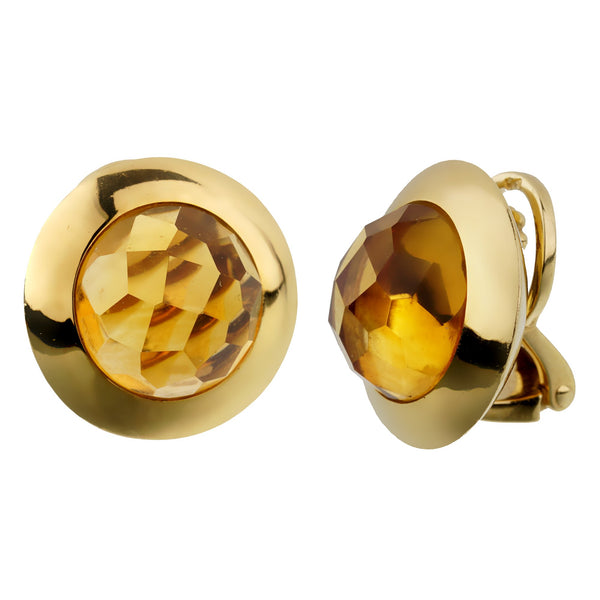
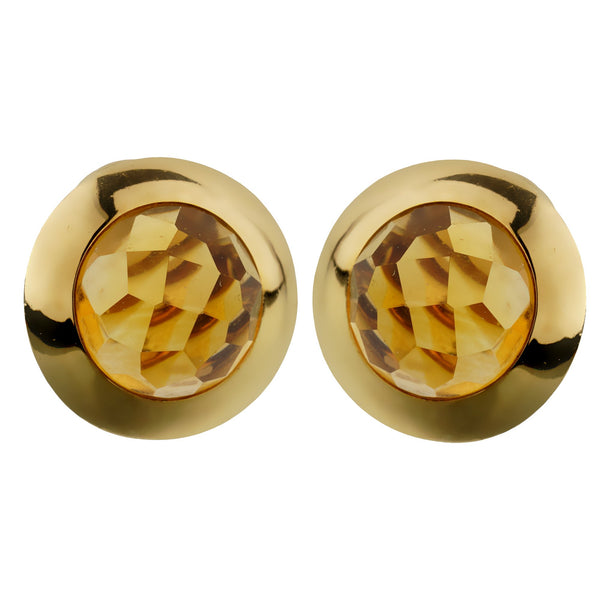
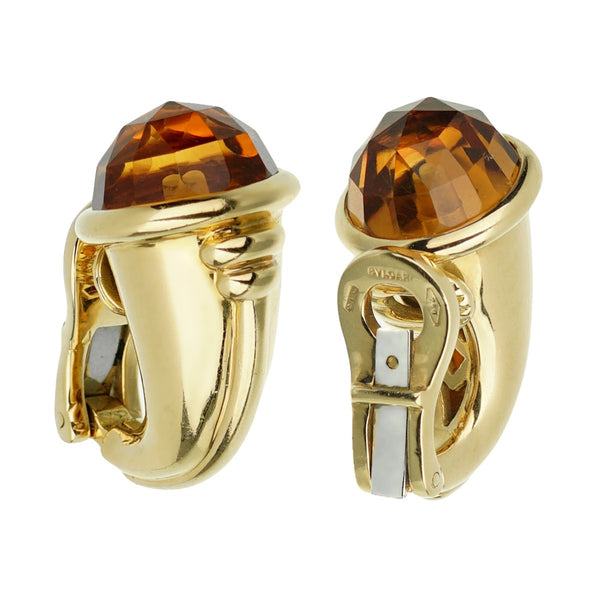
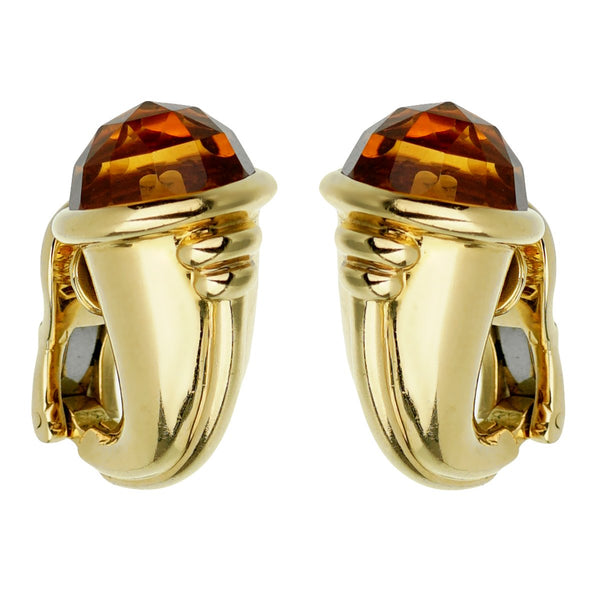
Citrine earrings at the luxury level are typically large and unafraid of color — a stone whose warmth is amplified at the ears, where light reaches it from multiple angles. Pomellato’s Lola earrings with large cabochon citrine drops in 18-karat yellow gold are among the most recognized luxury citrine earring designs on the secondary market. Bvlgari citrine dangle earrings in yellow gold and Dior citrine earrings with enamel accents represent the range of design approaches the major houses have applied to the stone. Vintage signed citrine earrings from the 1980s and 1990s in large clip-back and post formats are actively collected for their scale and specific mid-century aesthetic.
What We Verify on Every Pre-Owned Luxury Citrine Piece
Luxury citrine jewelry carries the house signature and metal hallmarks alongside the stone itself — and citrine’s specific optical characteristics make it an assessable material independent of the house markings. Every piece is verified before listing.
Every luxury citrine piece we list carries the house maker’s mark and the appropriate gold hallmark — Italian 750, French eagle-head, or Swiss 750 — verified under magnification on the clasp, ring shank interior, or earring post. The house signature is assessed for consistency with known production characteristics for the relevant period. Pomellato’s specific maker’s mark, Bvlgari’s “BVLGARI” engraving, and Piaget’s mark are all verifiable against known production standards.
Citrine is assessed for color consistency and tone — the warm yellow-to-amber range of genuine citrine versus the more aggressively orange tone of some heat-treated material. Natural citrine is rare; most fine jewelry citrine is heat-treated quartz, and at the major houses this is standard and not a defect. Stone clarity is assessed for chips, fractures, and surface condition. The stone’s color and clarity are stated honestly in every listing.
Citrine settings — bezel, prong, and cabochon channel in Pomellato pieces; pavé surrounds in Bvlgari designs — are assessed for stone security and setting integrity. Loose stones and worn prongs are disclosed explicitly. Diamond accents in mixed citrine-diamond pieces are examined stone by stone for security. No piece is listed with concealed setting issues.
Citrine surface condition — the stone’s polish, any chips on facet edges or cabochon surfaces, and any scratches — is assessed and described honestly. As a Mohs 7 material, citrine can accumulate surface marks from harder materials over time; wear condition is graded accurately and reflected in pricing.
The Opulent Jewelers Promise
Every luxury citrine piece at Opulent Jewelers is individually authenticated before listing — house signature, metal hallmarks, stone quality, and setting security verified on every piece, backed by our money-back guarantee.
Luxury Citrine Jewelry — What Buyers Ask
Citrine is a variety of quartz whose name comes from the French citron (lemon), referencing its warm yellow-to-amber color. It has a Mohs hardness of 7, making it genuinely durable for everyday wear. Luxury houses use citrine because its golden warmth pairs exceptionally well with 18-karat yellow gold — the two materials share a tonal family that produces a specific Italian and Art Deco aesthetic that other stones cannot replicate. Pomellato built much of its global reputation on this pairing. Bvlgari has used citrine in bold colored stone designs since the house’s most creative mid-century period. For the 1937 coronation of King George VI, Cartier created a tiara centered on a 62.35-carat emerald-cut citrine. Browse our current luxury citrine collection.
Yes — citrine is one of the two official November birthstones, alongside topaz. The National Association of Jewelers formally designated citrine as a November birthstone in 1912. The two stones share a history of confusion because both can appear in similar warm yellow tones — citrine is yellow quartz, while topaz is a distinct mineral species that also occurs in yellow. For November birthstone jewelry, citrine in 18-karat yellow gold from a major house — Pomellato, Bvlgari, Piaget — represents a meaningful and lasting gift with both gemological and design pedigree behind it.
Natural citrine — quartz that has acquired its yellow color through natural geological processes involving iron trace elements — is genuinely rare. Most citrine on the market, including the citrine used by luxury jewelry houses, is heat-treated: amethyst or smoky quartz that has been heated to transform its color to golden yellow or amber. At the luxury jewelry level, heat treatment is a standard and accepted practice — Pomellato, Bvlgari, and other houses use heat-treated citrine routinely and it does not affect the quality or value of the finished piece. Naturally colored citrine from Bolivia (Bolivianite) commands a premium over heat-treated material, but for signed luxury jewelry, the house origin and design quality are the primary value factors.
Secondary market pricing for pre-owned Pomellato citrine rings varies by collection, stone size, and condition. Pomellato Nudo citrine rings in 18-karat rose or yellow gold typically range from approximately $800 to $2,500 depending on stone size and specific format. Larger statement citrine rings with significant center stones in Pomellato’s characteristic yellow gold construction range from $1,500 to $4,500+. Vintage Pomellato citrine pieces — particularly hoop earrings with multiple cabochon citrine stones from the 1970s and 1980s — are priced based on gold weight and design period. All pricing at Opulent Jewelers reflects current secondary market conditions and is stated honestly in every listing.
Citrine is durable at Mohs 7 — harder than most everyday materials and resistant to normal scratching — but softer than sapphire (9) and diamond (10), which means storing citrine jewelry alongside harder stones requires care to prevent the citrine surface from being scratched. Clean with warm water and mild soap using a soft brush; avoid ultrasonic cleaners for cabochon citrine pieces, which can stress the stone surface. Citrine can fade with prolonged UV exposure — avoid storing in direct sunlight over extended periods. Avoid sudden temperature changes and exposure to harsh chemicals including perfume, hairspray, and cleaning products. Remove citrine rings before activities that would expose the stone to impact.
Yes. We purchase luxury citrine jewelry outright and accept pieces on consignment — Pomellato citrine rings, necklaces, and earrings; Bvlgari citrine pieces in all formats; Piaget and other signed luxury citrine; and significant estate citrine jewelry from major houses. House signature, metal hallmarks, stone quality, and setting security are verified on every piece. Reach out through our consignment inquiry page to get started.