
Piaget Jewelry





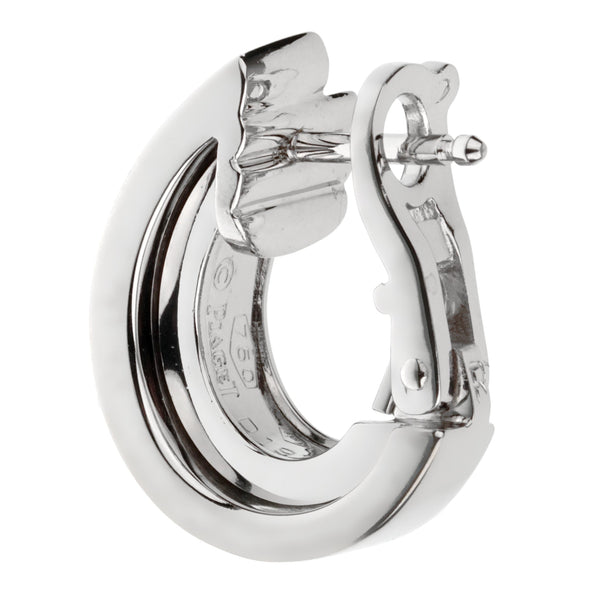
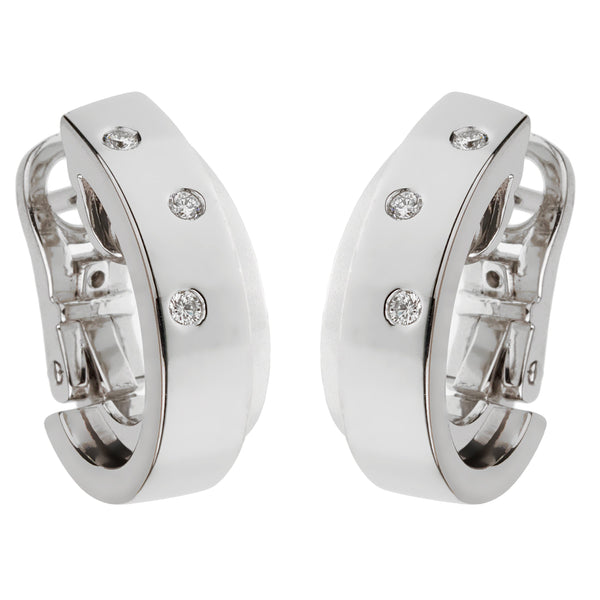

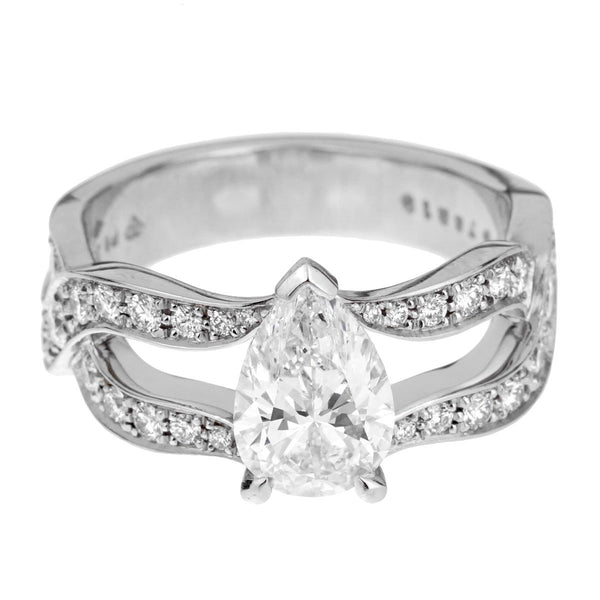
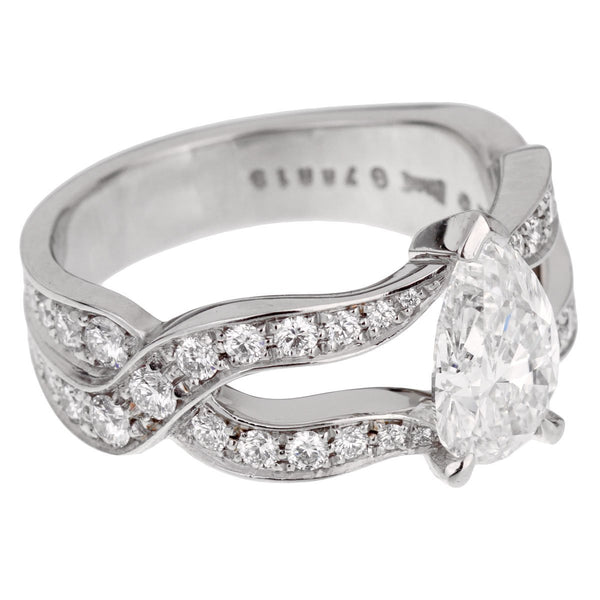









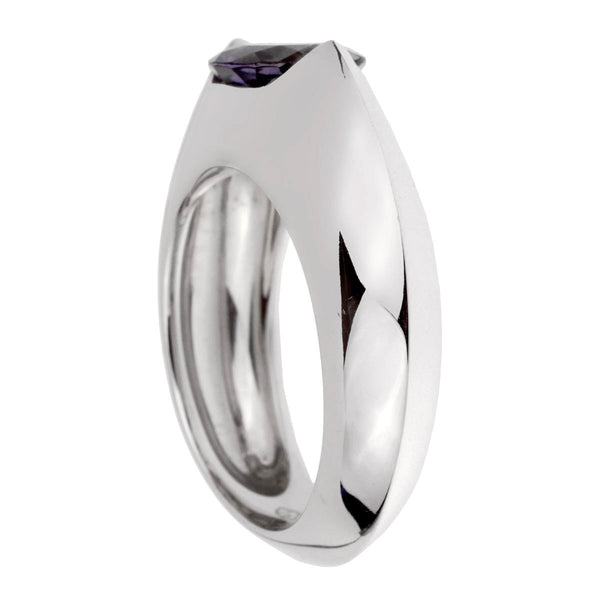
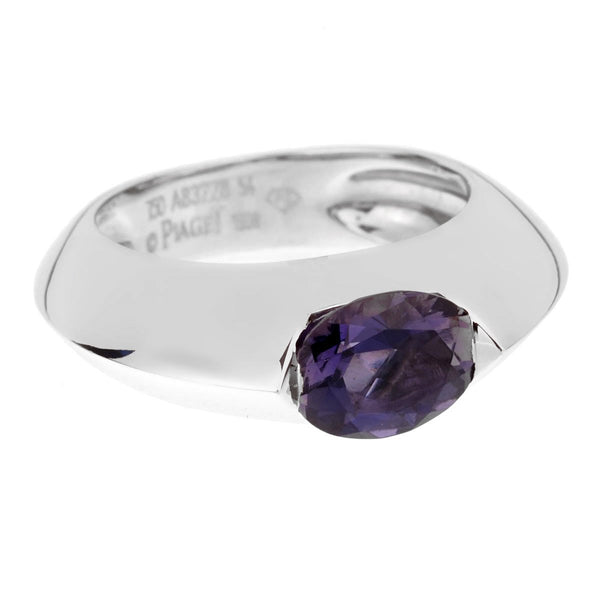

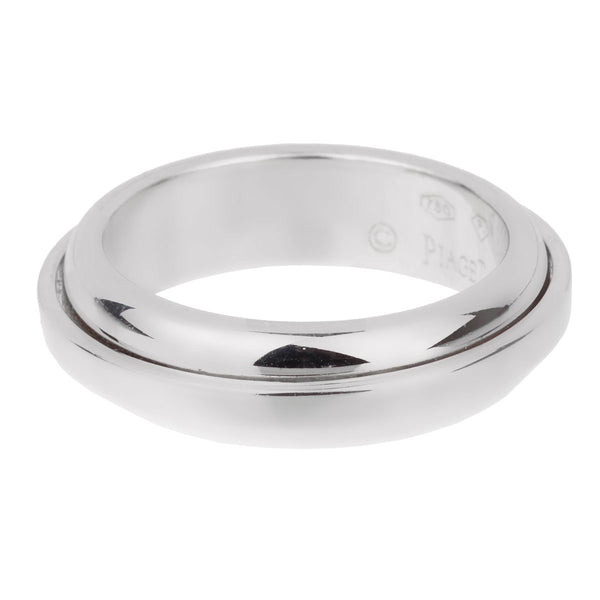
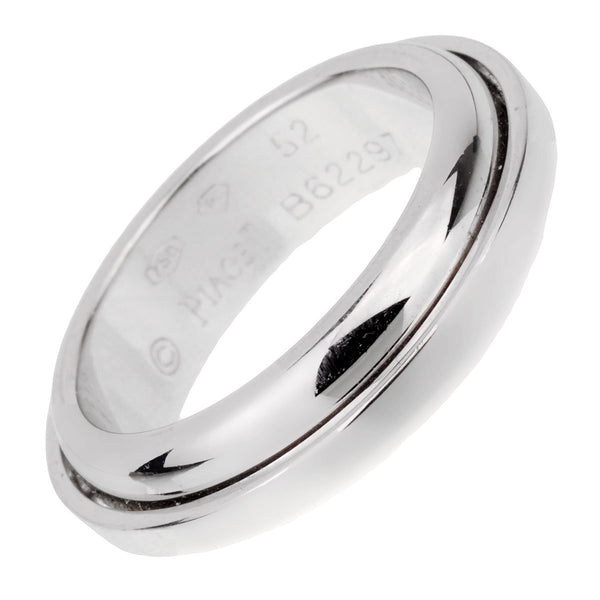


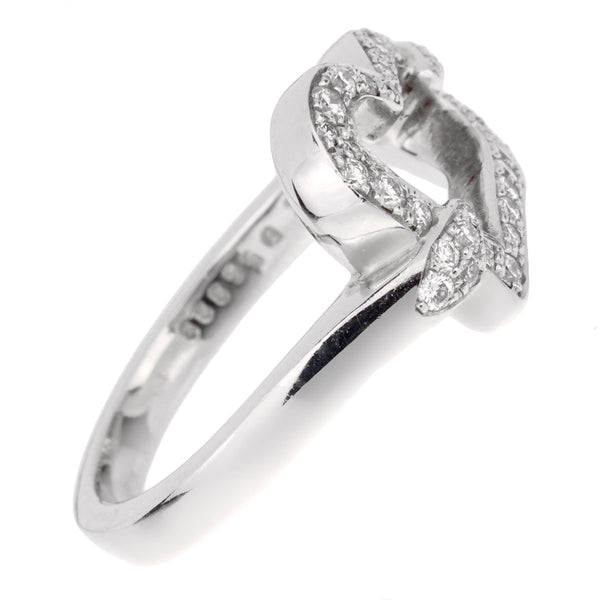
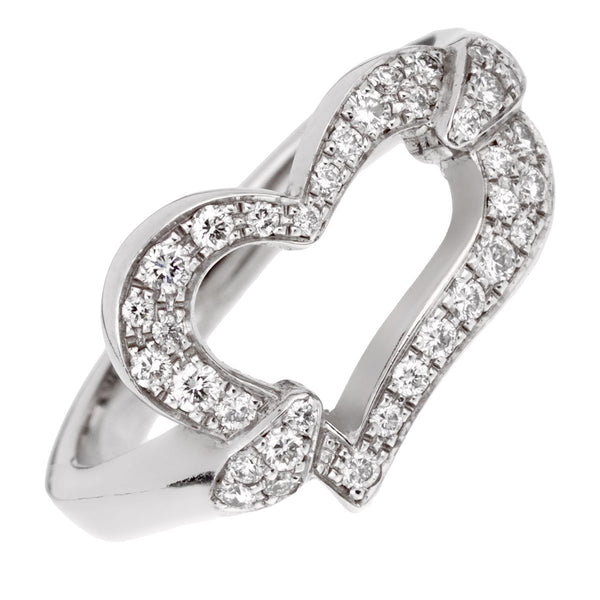


Georges-Édouard Piaget founded his first workshop on the family farm in La Côte-aux-Fées in 1874 with a single motto: “Always do better than necessary.” By 1957 that farm-bred precision had produced the world’s thinnest mechanical movement. By 1969 it had blurred the line between watchmaking and haute joaillerie entirely. No other house has done both with equal authority.
Opulent Jewelers — Authenticated Pre-Owned Piaget JewelryPiaget Jewelry — Where Swiss Watchmaking Mastery Meets Haute Joaillerie
Piaget was founded in 1874 by nineteen-year-old Georges-Édouard Piaget on the family farm in La Côte-aux-Fées — a small village at 1,058 meters in the Swiss Jura mountains. His motto, “Faire toujours mieux qu’il n’est nécessaire” — always do better than necessary — shaped everything the house has produced since. For the first decades, Piaget made movements and components for other watchmakers: Rolex, Breguet, Cartier, Longines, Vacheron Constantin. The work was excellent and anonymous. That changed in 1957, when Valentin Piaget introduced the Calibre 9P — a hand-wound mechanical movement measuring exactly 2mm in height. The world’s thinnest. Three years later, the Calibre 12P set the same record for automatic movements at 2.3mm, earning an entry in the Guinness Book of Records. These two movements gave Piaget the freedom to create its own style — and it used that freedom to decide, in 1957, to work exclusively in precious metals.
The leap from movement maker to jeweler was deliberate and complete. In 1959, Piaget opened its first Salon in Geneva and began showing jewelry alongside watches. By 1963 it had introduced hard stone dials. By 1967 it had collaborated with Salvador Dalí on a limited collection of watches, pendants, rings, and cufflinks — that same year Jackie Kennedy purchased a Piaget jade dial watch framed in diamonds and emeralds. Elizabeth Taylor owned several Piaget pieces including a yellow gold bracelet watch with oval-link construction that sold at the 2011 Taylor auction for $80,500 against a $2,000 estimate. Andy Warhol wore Piaget. In 1969, Piaget unveiled the 21st Century collection at the Basel Fair — openwork cuffs, textured bracelets, stone dials — and blurred the distinction between jewelry watch and wearable sculpture in a way no other house had managed. Piaget has been owned by the Richemont group since 1988 and continues to produce at both La Côte-aux-Fées and the Plan-les-Ouates atelier near Geneva, where goldsmithing and gem-setting are developed alongside watchmaking.
At Opulent Jewelers, our pre-owned Piaget collection focuses on the house’s jewelry — Possession rings and bracelets, Piaget Rose pieces, Limelight designs, and estate Piaget from across the house’s production history. Every piece is authenticated before listing and sourced from private estates and consignors.
Piaget Jewelry Collections We Carry
Possession — The Spinning Ring Collection
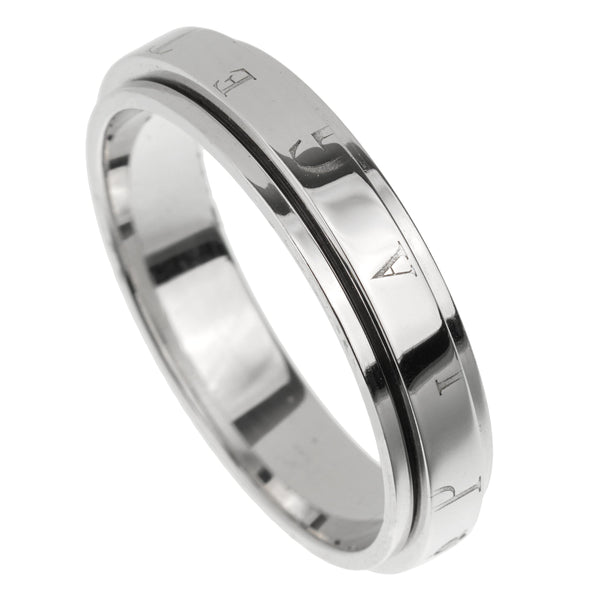
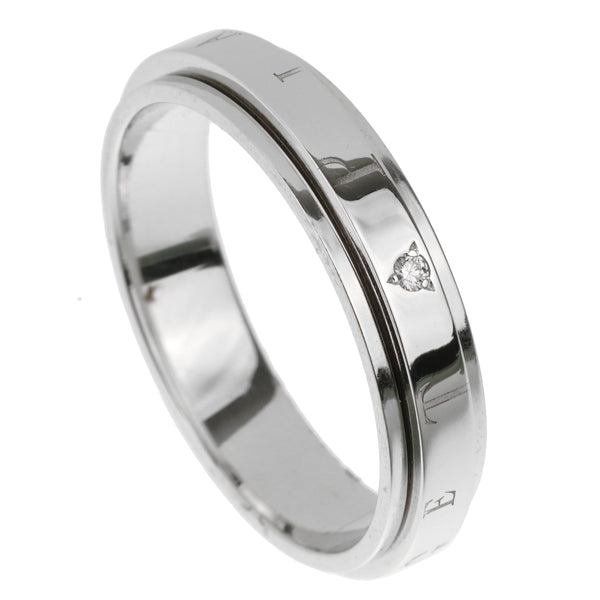
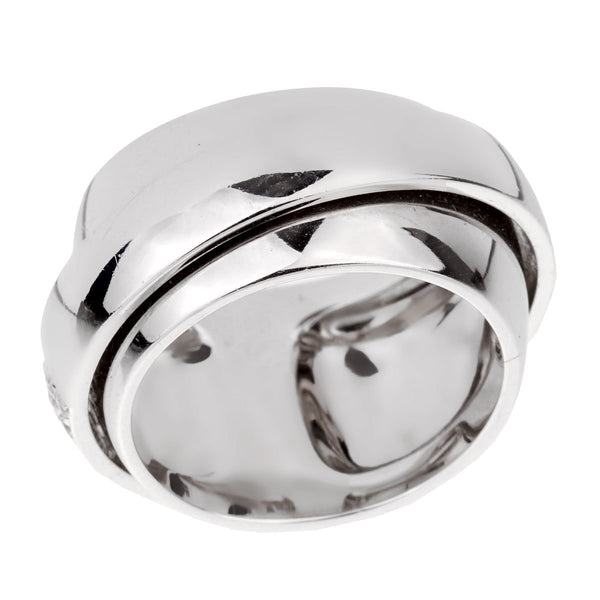
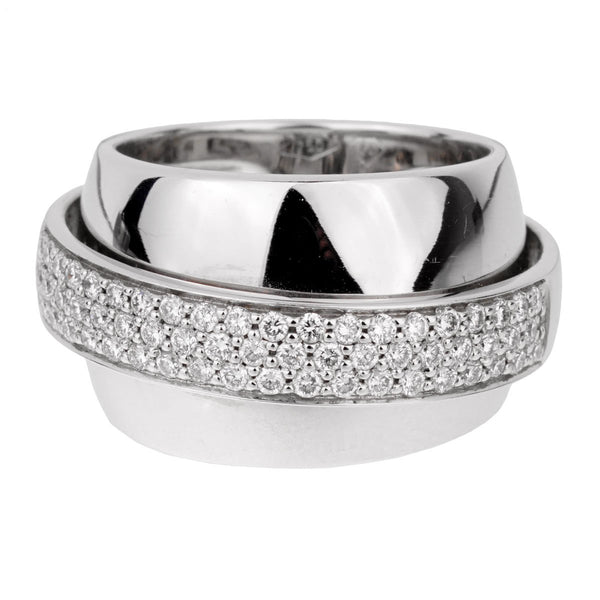
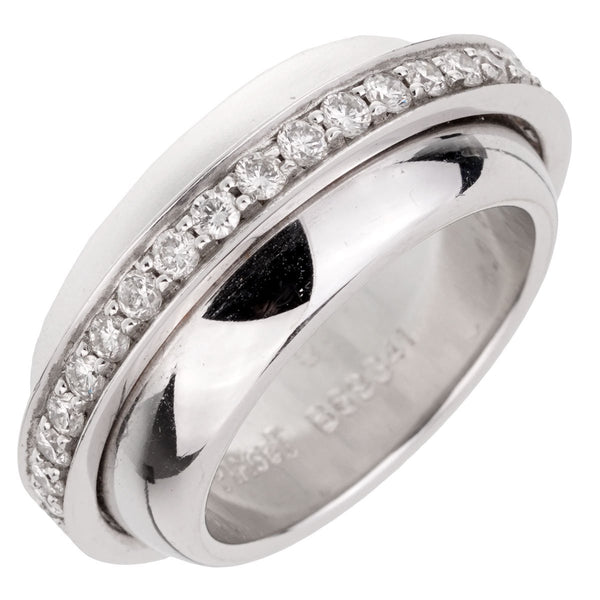
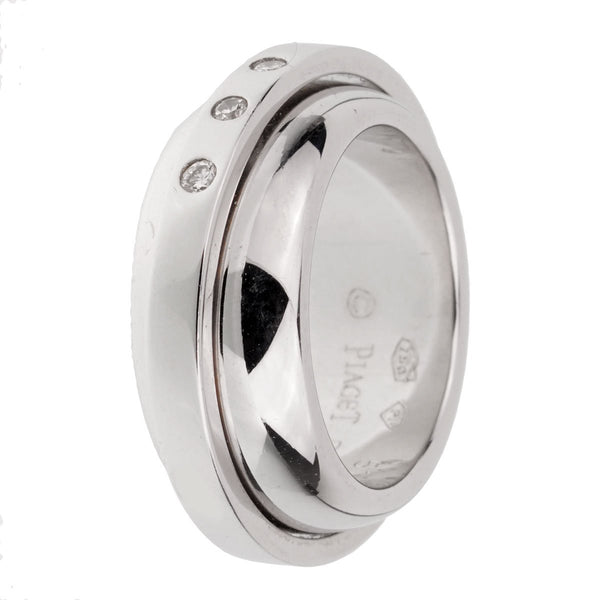
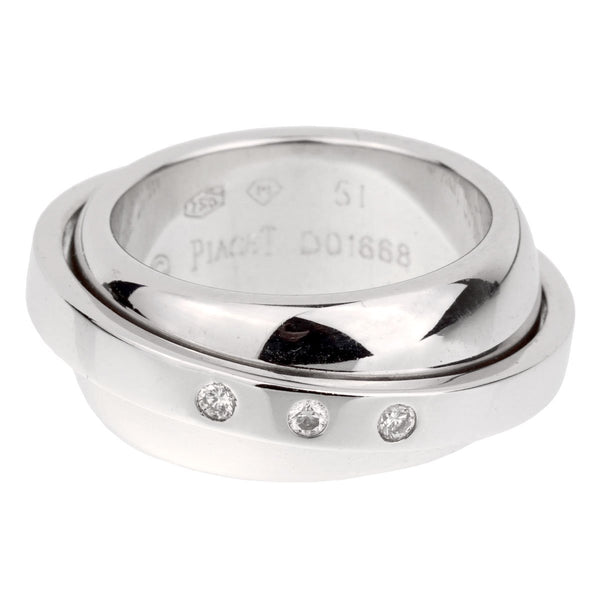
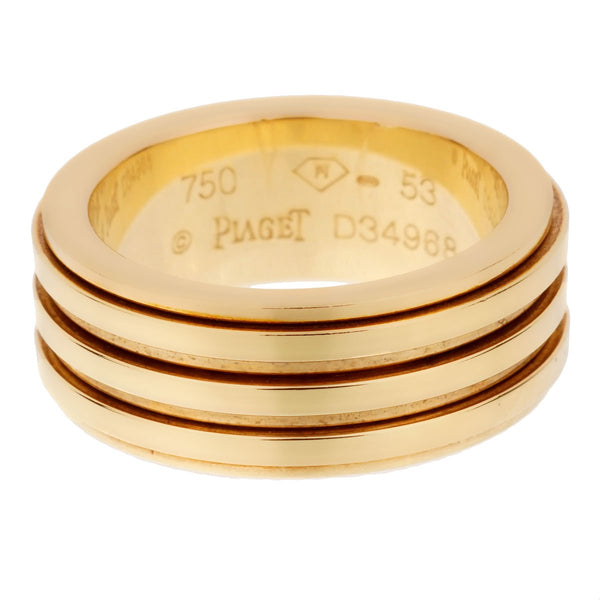
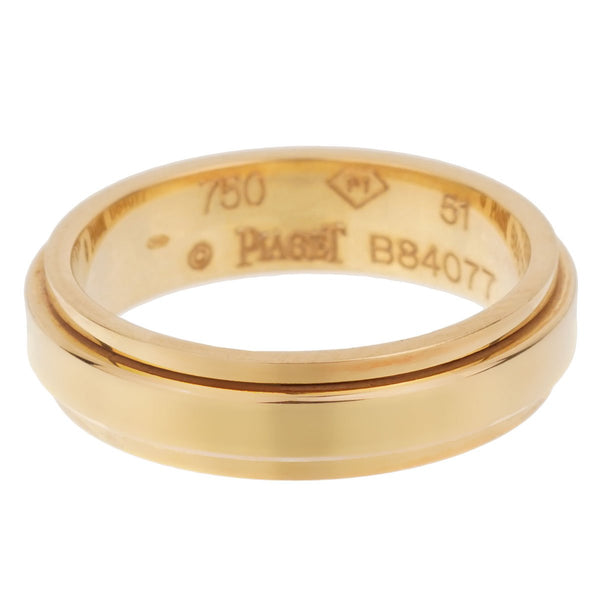
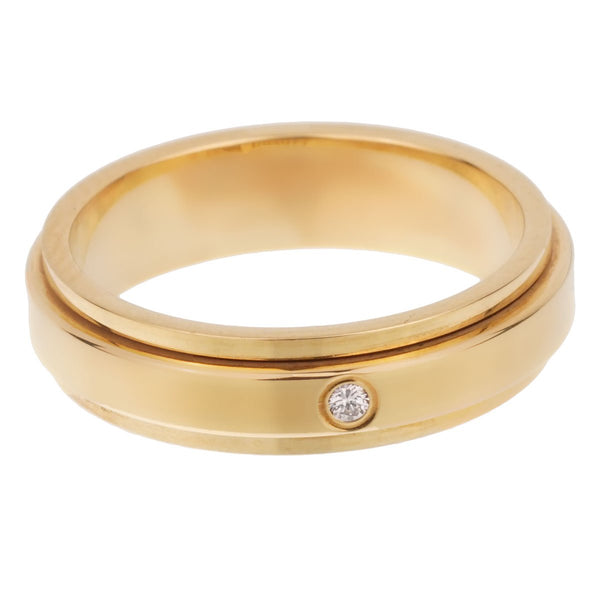
Launched in 1990, the Possession collection is built on a single defining gesture: the ring spins. The outer band rotates freely around the inner band — a turning movement that is addictive to the wearer and immediately distinctive to anyone who recognizes it. Piaget’s “Décor Palace” engraving — inspired by the guilloché technique traditionally used on watch dials — covers the gold with a hand-engraved textile-like texture that catches light as it moves. Available in 18-karat rose and white gold, plain and with diamonds, in single-band and multi-band stacking formats. The Possession setting — a diamond held between two brackets engraved in gold so the stone appears to stand free — is a Piaget-exclusive technique. Pre-owned Possession rings are the most searched Piaget jewelry pieces on the secondary market.
Piaget Rose
A tribute to Yves Piaget’s lifelong dedication to roses — the Piaget Rose is an award-winning cultivar developed by the family and named for the house. The jewelry collection renders the rose in gold and diamonds with botanical precision: petals individually worked, openwork centers, the flower in full bloom or bud at the scale of a ring, pendant, earring, or bracelet element. A design tradition that dates to the 1960s and represents the poetic, nature-inspired dimension of Piaget’s jewelry range.
Limelight Gala
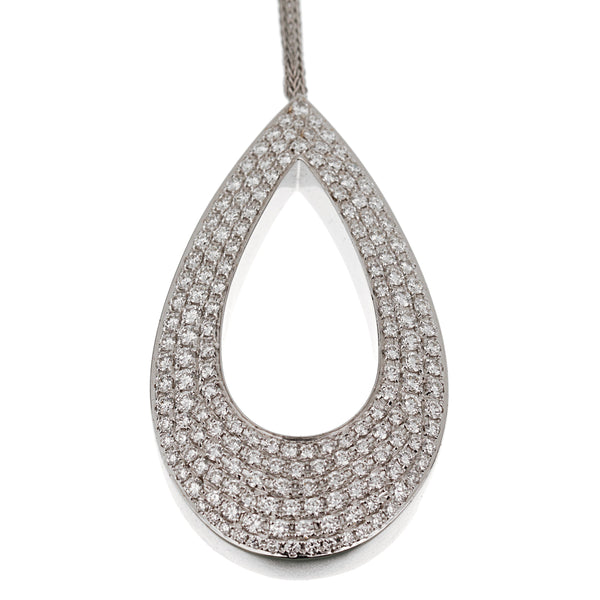
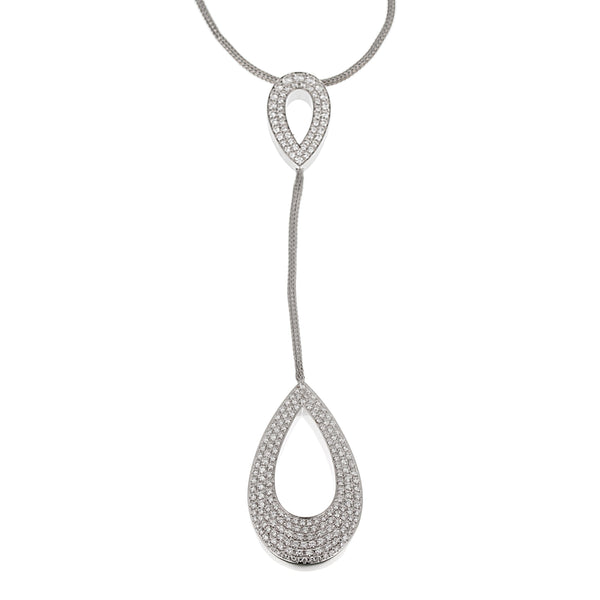
The Limelight collection was introduced in 2004 and represents the formal, high-jewelry register of the Piaget range — pieces designed for the moment of arrival. Limelight Gala rings, necklaces, bracelets, and earrings in 18-karat white and rose gold with significant diamond setting, soft curves, and the polished finish associated with Piaget’s most formally dressed designs. These are pieces from a house that has been dressing the world’s most celebrated women — from Elizabeth Taylor to Jackie Kennedy — since the late 1950s.
Vintage & Estate Piaget
Piaget’s jewelry history spans over sixty years of production from the late 1950s onward, and estate pieces from the house’s most creative decades — the 1960s and 1970s, when Piaget was blurring the line between jewelry and sculptural objects in gold — represent some of the most historically significant pieces in the secondary market. Hard stone pieces with the distinctive carved dial aesthetic, gold link bracelets from the Polo era, and signed estate jewelry bearing the Piaget maker’s mark from across the house’s production history.
What We Verify on Every Pre-Owned Piaget Jewelry Piece
Piaget jewelry carries Swiss gold hallmarks and the house’s specific maker’s mark alongside the reference number on most pieces. The Décor Palace engraving and the Possession turning mechanism are both verifiable production characteristics specific to the house.
Genuine Piaget jewelry carries the Swiss 750 gold hallmark confirming 18-karat gold alongside the Piaget maker’s mark. Both are verified under magnification on every piece. The reference number engraved on the piece is noted where present and cross-checked for consistency with the design and production period.
The Possession ring’s turning mechanism is assessed for smooth rotation and correct function. The Décor Palace engraving is examined for the specific texture and depth consistent with Piaget’s hand-engraving production. The Possession diamond setting — the stone held between two engraved brackets — is checked for stone security and setting integrity.
Diamond pavé on all Piaget jewelry pieces is assessed for stone quality consistent with the house’s production standards, setting security, and total diamond weight as stated. Missing or loose stones are disclosed explicitly before listing and reflected honestly in pricing.
Ring sizes are measured precisely in both European and US equivalents. Surface condition — engraving wear, gold finish, stone faces — is graded honestly. Possession rings are specifically assessed for wear on the turning mechanism track and the engraved surfaces, which show wear more visibly than plain polished gold. Condition issues are always disclosed.
Piaget Jewelry — What Buyers Ask
Piaget is a Swiss luxury house founded in 1874, known for two things in equal measure: the world’s thinnest watch movements and haute joaillerie of the highest standard. The house made movements for Rolex, Cartier, and Vacheron Constantin before developing its own ultra-thin Calibre 9P in 1957 — at 2mm, the thinnest hand-wound mechanical movement in the world. That precision engineered the house’s jewelry approach: a commitment to working only in precious metals, producing pieces where goldsmithing technique is the primary expression rather than the stone alone. The Possession spinning ring, the Décor Palace hand-engraving technique, and the Piaget Rose floral collection are the most recognized Piaget jewelry designs. Browse our current Piaget jewelry collection.
Yes — Piaget is a Richemont group house producing in 18-karat gold with Swiss hallmarks from ateliers in La Côte-aux-Fées and Plan-les-Ouates. The house’s goldsmithing tradition is genuine and specific: the Décor Palace engraving is a hand-applied technique developed from the guilloché work traditionally used on watch dials, and the Possession turning ring’s mechanism requires precision construction that has no equivalent in other houses. Piaget sits in the same tier as Cartier, Van Cleef & Arpels, and Bvlgari within the Richemont and broader Swiss luxury fine jewelry world.
The Piaget Possession ring is the house’s most iconic jewelry design, launched in 1990. Its defining feature is a spinning outer band that rotates freely around the inner band — an addictive tactile gesture that is immediately distinctive. The gold surface is covered in Piaget’s Décor Palace hand-engraving, a guilloché-inspired texture that catches light as the ring turns. Available in 18-karat rose and white gold, plain and with diamonds, as single bands and in stacking configurations. Browse our Possession collection for current availability.
Piaget has been owned by the Swiss Richemont group since 1988. Richemont is the world’s second-largest luxury conglomerate and also owns Cartier, Van Cleef & Arpels, Buccellati, Vacheron Constantin, IWC, and several other major watch and jewelry houses. Piaget operates as an independent brand within the Richemont portfolio and maintains its own design identity, ateliers, and collections. The founding family was involved in the house’s direction through Yves Piaget, a fourth-generation family member and trained gemologist who played a significant role in the house’s celebrity clientele development before the Richemont acquisition.
Piaget’s celebrity client history is extensive. Jackie Kennedy purchased a Piaget jade dial watch framed in diamonds and emeralds in 1967. Elizabeth Taylor owned multiple Piaget pieces; a yellow gold bracelet watch from her collection sold at the 2011 Taylor auction for $80,500 against a $2,000 estimate. Sophia Loren, Miles Davis, and Björn Borg were also clients. Andy Warhol wore Piaget watches. In 1967, Piaget collaborated with Salvador Dalí on a limited collection of watches, pendants, rings, and cufflinks. The house’s “Piaget Society” gatherings, organized by Yves Piaget in the 1970s and 1980s, brought together celebrity clients in a format that presaged modern luxury brand ambassador culture.
Genuine Piaget rings carry the Swiss 750 gold hallmark and the Piaget maker’s mark on the interior shank, along with the reference number in most cases. On Possession rings specifically, the Décor Palace engraving is the most reliable external authentication check — it is a hand-applied technique with a specific texture depth and regularity that is difficult to replicate convincingly. The turning mechanism should rotate smoothly with the specific feel of Piaget’s construction. Diamond Possession pieces carry the Possession setting with its specific bracket geometry. Every Piaget ring we list has been verified against these criteria before entering our collection.
Yes. We purchase Piaget jewelry outright and accept pieces on consignment — Possession rings and bracelets, Piaget Rose pieces, Limelight designs, and vintage estate Piaget. Swiss hallmarks, maker’s mark, and condition are assessed honestly on every piece. Possession ring turning mechanism function and engraving condition are specifically verified. Reach out through our consignment inquiry page to get started.
Continue Exploring