
Hermes Earrings


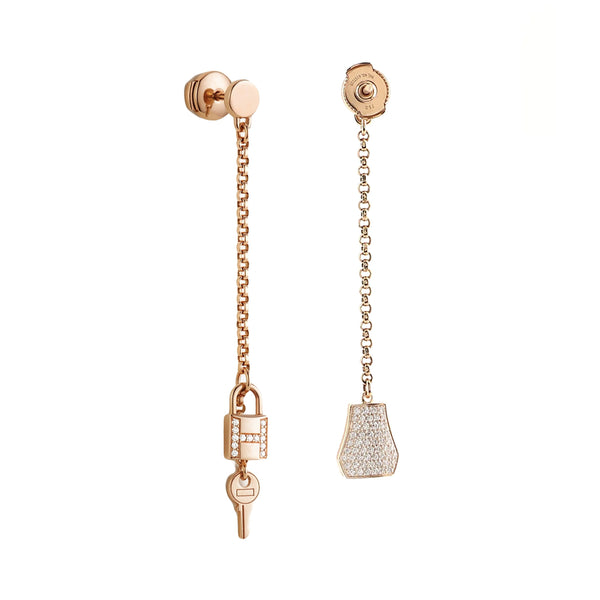
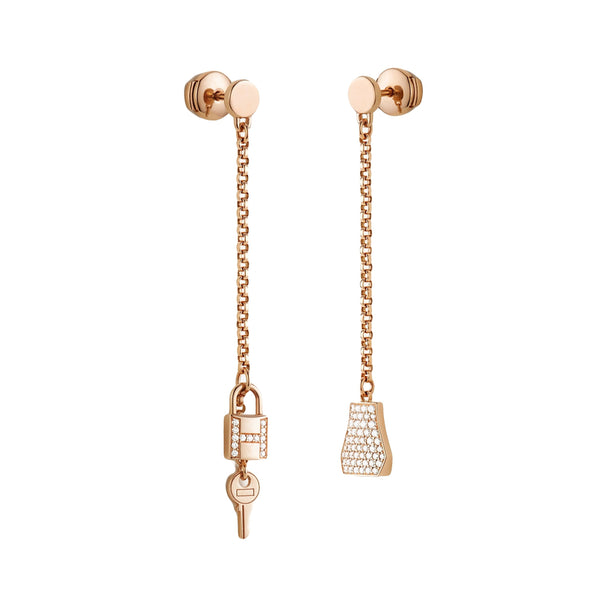

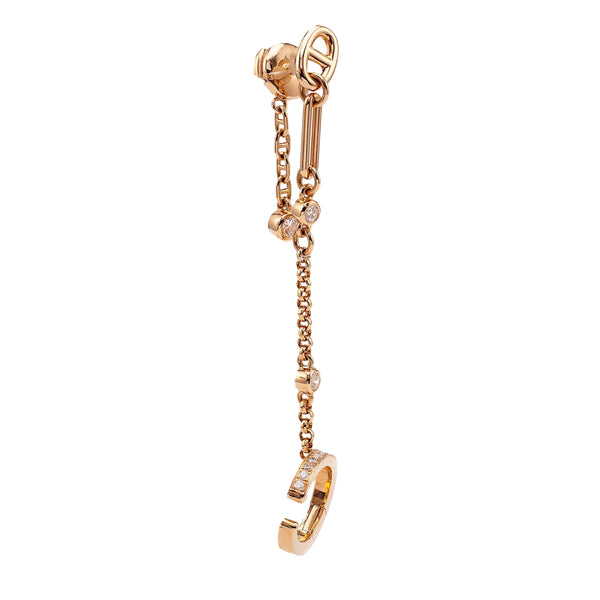
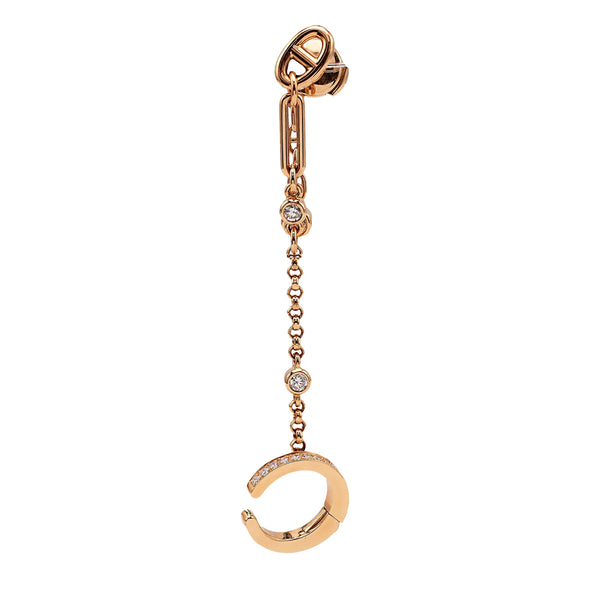

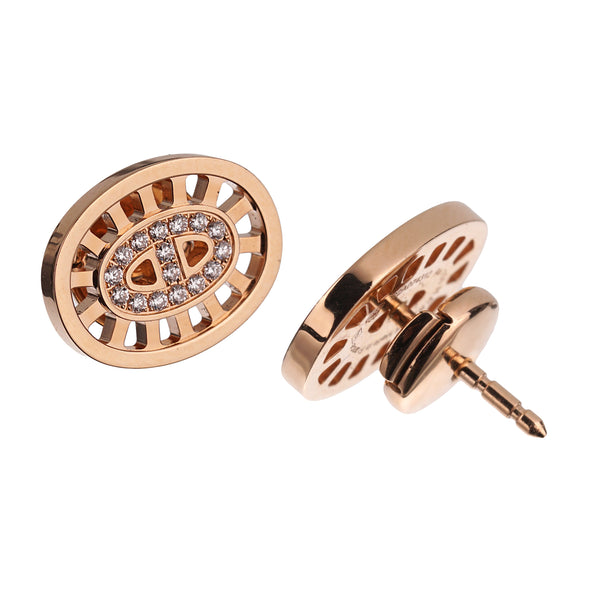
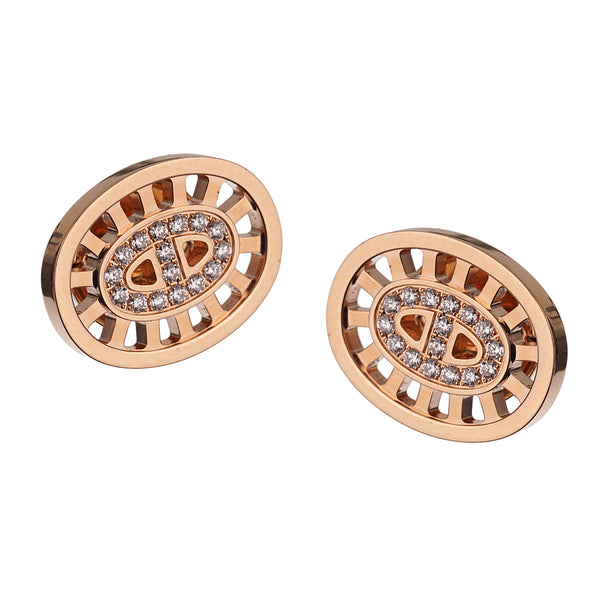


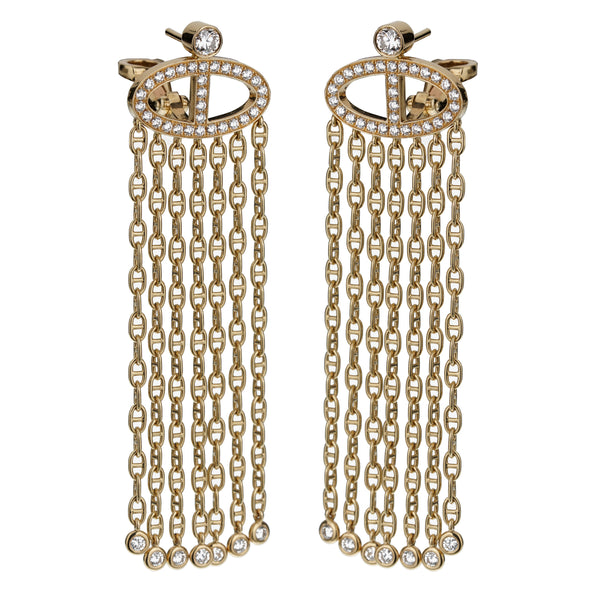
Hermes Limited Edition Chaine d'Ancre 18k Yellow Gold Diamond Drop Earrings


Hermès earrings carry the same references as every other piece the house makes — the saddle stud, the anchor link, the Kelly clochette, the horse in motion. Worn at the ear, these objects from the equestrian world become something else entirely.
Pre-Owned Hermès Earrings in Gold & Silver
Hermès earrings extend the house's design vocabulary — anchors, chains, hardware, equestrian motifs, natural forms — into a format that sits at the most visible point of the body. Where a bracelet or ring communicates through touch and close inspection, earrings frame the face and are seen at distance, in photographs, in every social interaction. For a house whose motifs are as immediately legible as Hermès's, the earring format rewards the brand's design language particularly well: the Chaîne d'Ancre anchor link reads at a glance; the Kelly Clochette bell is unmistakable; vintage sugarloaf colored stone clip-ons in yellow gold announce their origin with complete confidence.
Hermès produces earrings across its full range of collections — studs and drops in the Chaîne d'Ancre anchor link motif, the Kelly Clochette drop earrings with their suspended bell and diamond pavé, Galop horse motif formats, Collier de Chien stud earrings in gold with enamel, and a substantial archive of vintage clip-on and post earrings from the 1960s through 1990s. The vintage earrings in particular — sugarloaf carnelian clips in yellow gold, enamel horse motif formats, large sculptural gold clips — represent pieces that cannot be found in any current retail catalog and surface only from private estates. At Opulent Jewelers, every pre-owned Hermès earring is authenticated before listing, backed by free domestic shipping and our full money-back guarantee.
Hermès Earring Collections
The anchor link motif translated into earring format — stud versions with a single anchor link, drop versions with a chain of links suspended from a simple fitting. Available in sterling silver and 18K gold. The most consistently recognizable Hermès earring design and the most actively traded format on the secondary market.
The small bell-shaped clochette from the Kelly bag — the leather charm that holds the bag's key — rendered as a drop earring in 18K rose gold with round brilliant diamonds. The Kelly Clochette earring is one of the most directly referential pieces Hermès makes, connecting the jewelry explicitly to the most culturally significant object the house produces. Diamond pavé versions are the most actively collected format.
The spiked dog collar hardware translated into stud earring format — the same studded motif as the bracelet and ring, set in 18K gold with enamel accents in the house's signature palette. Collier de Chien stud earrings in yellow gold with colored enamel are among the most recognizable vintage Hermès earring formats and the clearest connection to the leather goods heritage.
Hermès's equestrian motif earrings — the Galop horse in motion, horse head formats, horseshoe studs — in 18K gold and sterling silver. These are the pieces most directly connected to the house's founding identity in the saddler's workshop. Limited edition formats with three-dimensional horse subjects and diamond accents are the most collectible.
Pre-2000 Hermès earrings — sugarloaf carnelian clips in 18K yellow gold, large sculptural gold clip-ons, enamel animal motif formats, and other estate designs that no longer appear in the retail catalog. Each is irreplaceable. Vintage Hermès earrings in yellow gold with colored stones represent the house at its most uninhibited and most expressive, and they surface only from private collections.
How to Authenticate Hermès Earrings
Signature and Hallmarks
Genuine Hermès fine jewelry earrings carry the "Hermès" signature on the post, clip back, or a small plaque on the piece — accompanied by the appropriate metal hallmark. The signature should be crisp, evenly formed, and consistent in depth. Vintage clip-on pieces may carry marks consistent with their production era; the format varies, but the quality of the engraving remains the constant marker of genuine production. At Opulent Jewelers, every piece is verified against these criteria before listing.
Chaîne d'Ancre Stud and Drop Earrings
On Chaîne d'Ancre earrings, the anchor link should be perfectly formed — symmetrical, with clean edges and mirror-polished surfaces. On drop formats, each link in the suspended chain should move freely and independently. The post fittings on stud formats should be straight and precisely placed at the center of the anchor link. Any asymmetry in the link form, visible casting marks, or rough surface quality indicates inferior production.
Vintage Clip-On Mechanism
On vintage Hermès clip-on earrings, the clip mechanism should engage and release cleanly with no grinding or excessive looseness. The spring tension should be firm enough to hold the earring securely without excessive pressure — genuine Hermès clip mechanisms are engineered for wearability as well as security. Clip backs should be finished to the same quality as the front of the earring — rough or unfinished clip mechanisms on otherwise polished pieces indicate replacement or non-genuine construction.
— The Opulent Jewelers Promise —
Every Hermès earring at Opulent Jewelers is individually authenticated before listing — signature verified, hallmarks confirmed, construction assessed, enamel and stone condition documented. Free domestic shipping and a full money-back authenticity guarantee on every purchase.
Frequently Asked Questions — Hermès Earrings
What are the most popular Hermès earrings?
The Chaîne d'Ancre earrings — in both stud and drop formats, available in sterling silver and 18K gold — are the most widely recognized and most actively traded Hermès earring design. The Kelly Clochette drop earrings in 18K rose gold with diamonds are the most collected among buyers specifically seeking fine jewelry formats with significant diamond content. Vintage Hermès clip-on earrings in 18K yellow gold — sugarloaf colored stone formats, sculptural gold clips, enamel animal designs — are the most sought by serious collectors of the house's archive.
Does Hermès make gold earrings?
Yes. Hermès produces earrings in 18K yellow gold, 18K rose gold, and 18K white gold — all bearing the "750" hallmark — as well as sterling silver. The Kelly Clochette drops are typically in 18K rose gold. Vintage Hermès gold earrings from the 1960s through 1990s in 18K yellow gold — clip-on formats, sugarloaf stones, equestrian motifs — are among the most wearable and most distinctively Hermès pieces available on the secondary market. All Hermès fine jewelry earrings are in precious metal; the house does not produce earrings in base metal or gold-filled materials.
Are vintage Hermès clip-on earrings worth buying?
For collectors who appreciate the house's archive, vintage Hermès clip-on earrings are among the most compelling pre-owned Hermès jewelry available. Pieces from the 1960s through 1990s — sugarloaf carnelian clips in yellow gold, sculptural enamel formats, horse and nature motif designs — represent the house's jewelry at its most uninhibited and most specifically of their era. None of these designs appear in the current retail catalog; they surface only from private estates. The clip mechanisms are typically engineered for genuine wearability, and the gold quality is consistent with fine jewelry production standards. These pieces are underpriced relative to their quality and historical significance.