
Hermes Jewelry


Hermes Constance Amulettes 18k White Gold Diamond Charm Pendant Necklace


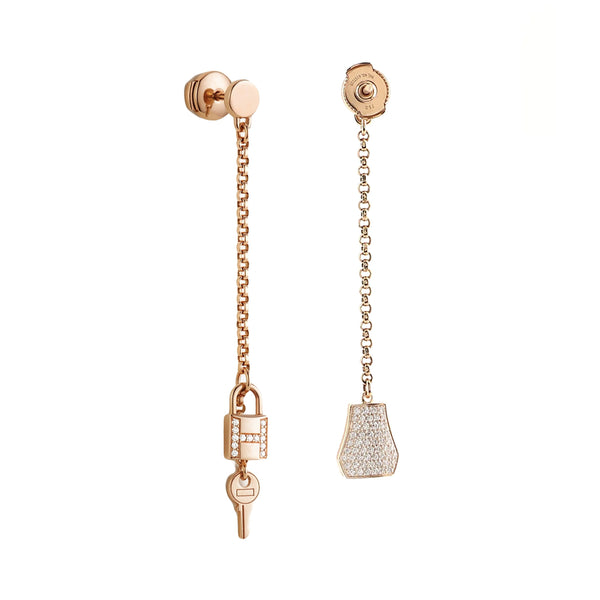
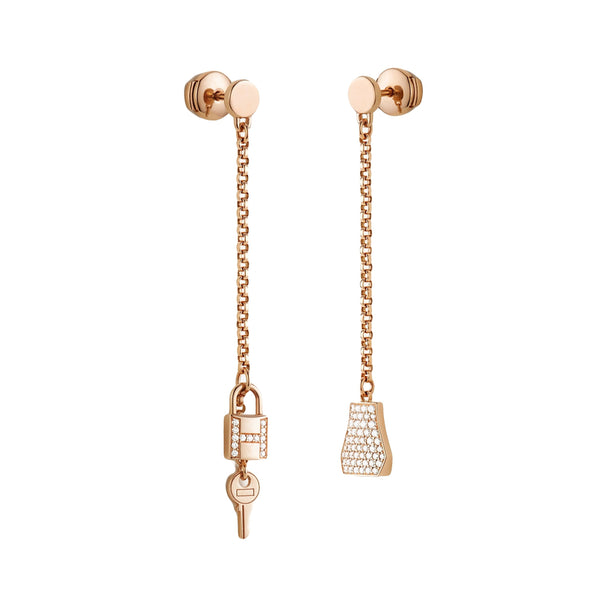

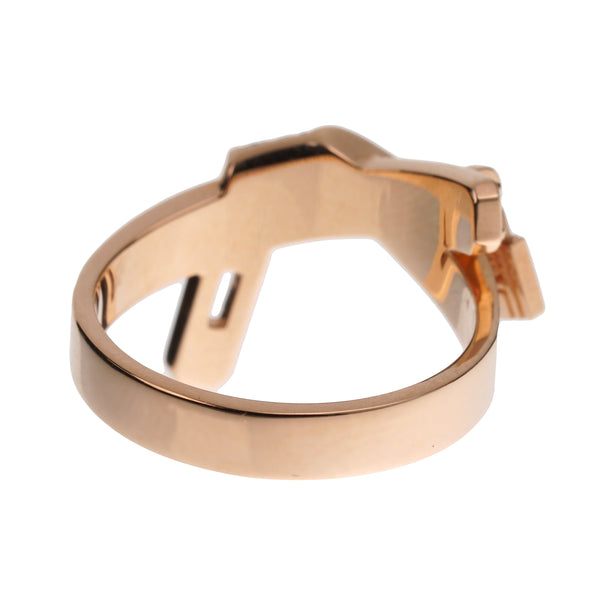
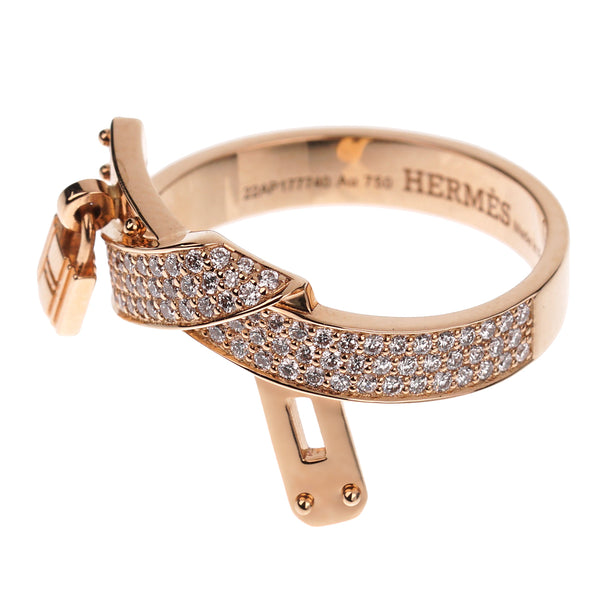

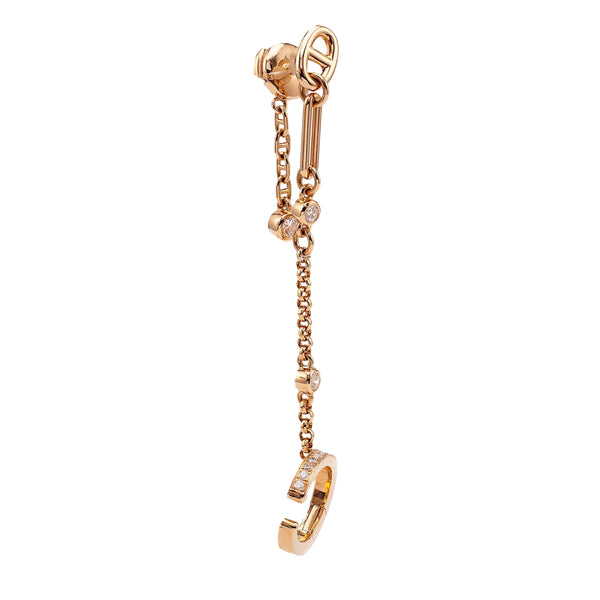
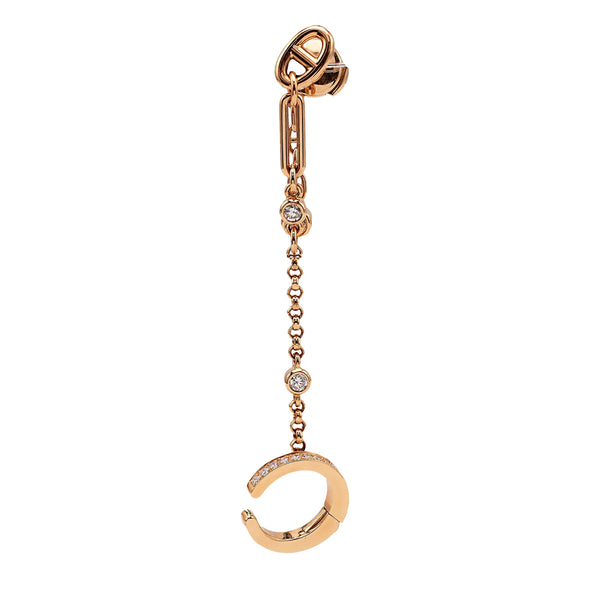

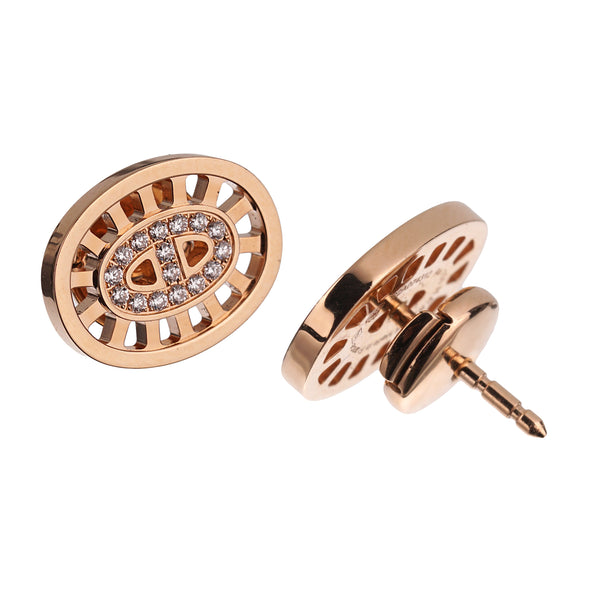
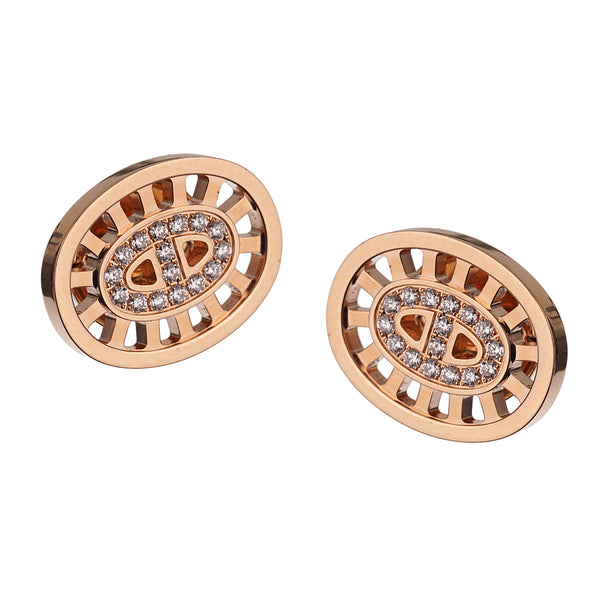

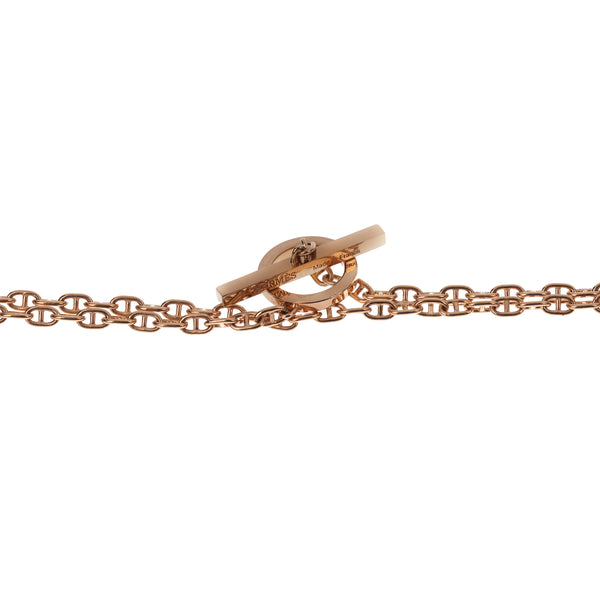
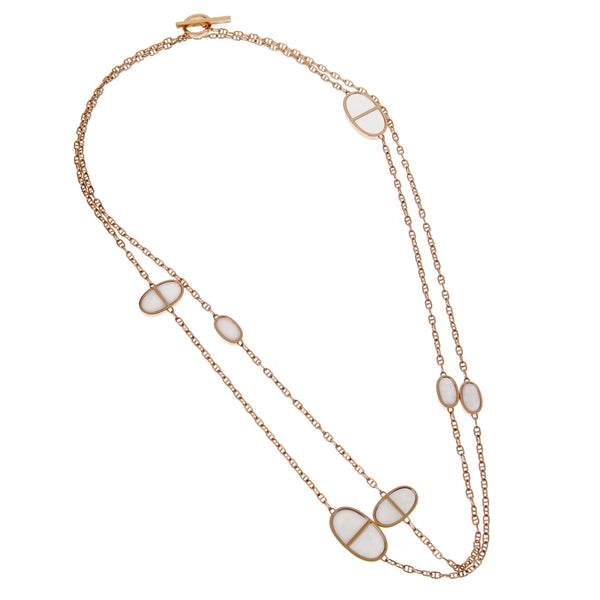
"Hermès began with a harness, not a jewel. That equestrian origin — precision, function, uncompromising craft — is still present in every anchor link, every pyramid stud, every piece we carry."
Pre-Owned Hermès Jewelry — Chaîne d'Ancre, Collier de Chien & More
Hermès was founded in Paris in 1837 as a harness workshop — a maker of bridles, saddles, and riding equipment for the European aristocracy. That origin defines everything the house has produced since, including its jewelry. Where other maisons drew from floral motifs or geometric abstraction, Hermès turned to the stable: the anchor chain, the dog collar, the bit, the stirrup. The result is a body of jewelry unlike anything else in the luxury world — immediately recognizable, rooted in function, and built to last.
The house produced its first jewelry piece in 1927: the Filet de Selle bracelet, a miniature silver horse bit mounted on a leather strap. It was not conceived as a fashion statement — it was a craftsman's expression of what the house knew best. That restraint and specificity has remained the defining quality of Hermès jewelry ever since. The Chaîne d'Ancre, designed by Robert Dumas in 1938 and inspired by the chains used to hold ship anchors, has been in continuous production for nearly ninety years. The Collier de Chien — literally "dog collar" — arrived in the 1940s, translating the spiked leather working collar into a piece of fine jewelry. Each of these designs carries the same logic: take a functional object, distill it to its essence, and make it extraordinary.
At Opulent Jewelers, we have spent more than fifteen years sourcing, authenticating, and selling pre-owned Hermès jewelry from private estates and collector networks across the country. Our inventory spans the full spectrum of Hermès jewelry — from early vintage pieces in silver and gold to contemporary 18K pieces and enamel bracelets — with every single item physically examined and authenticated before it appears in our collection. We are not a marketplace. Every piece we list is one we own, stand behind, and can vouch for completely.
Hermès Jewelry by Collection
Eight decades of design. Every collection traceable to the same equestrian origin.
-
Designed by Robert Dumas and inspired by the anchor chains used on ships in the port of Normandy, the Chaîne d'Ancre is Hermès's most enduring and beloved jewelry design. The anchor link — a rounded rectangular form — has been produced continuously for over eighty years in three sizes (small, medium, and large) across yellow gold, rose gold, and sterling silver. It is available as bracelets, necklaces, earrings, rings, and cufflinks. Vintage Chaîne d'Ancre pieces in 18K yellow gold — particularly large-link versions from the 1960s and 1970s — are among the most sought-after secondary market pieces in all of Hermès jewelry.
The Chaîne d'Ancre Enchainée variation, introduced later, features interlocking links that give the chain a more complex, layered appearance. The Punk variation, with oversized exaggerated links in sterling silver, is a bolder interpretation popular with younger collectors.
-
The Collier de Chien — literally "dog collar" — is Hermès's most distinctive and recognizable leather jewelry piece. Inspired by the spiked working collars used on dogs in rural France, it translates industrial hardware into luxury: a wide leather strap in calfskin, alligator, or lizard, adorned with pyramid studs and a central O-ring in gold or palladium plate. The CDC is as much leather goods as it is jewelry, which is precisely what makes it singular in the fine jewelry world. The quality of the leather — Barenia, Togo, Swift, Alligator — significantly affects value on the secondary market, with exotic leathers commanding substantial premiums.
-
The Clic H — named for the sound it makes when its H-shaped clasp snaps shut — is Hermès's most accessible and widely collected fine jewelry piece. A rigid enamel bangle with a prominent H-clasp in palladium or gold plate, it is available in narrow and wide versions across an enormous range of enamel colors that Hermès updates seasonally. The Clic H is the most counterfeited piece in all of Hermès jewelry; authentication requires close examination of the H clasp (which should have a thinner bar at center and use slotted screws, never Phillips), the enamel quality (which should be rounded at the edges, never sharp), and the interior hallmark and dating code.
-
The Kelly bracelet draws its design directly from the clasp of the iconic Kelly bag — the turn-lock and hardware translated into a rigid gold bangle worn on the wrist. Available in 18K yellow, white, and rose gold, often set with diamonds on the clasp itself, the Kelly bracelet is among Hermès's most refined fine jewelry pieces and among the strongest performers on the secondary market. The Galop collection, introduced more recently, takes the stirrup as its central motif — a U-shaped form in 18K gold, sometimes set with diamonds — and has quickly become a collector favorite.
-
The Filet de Selle — "saddle net" in French — is the oldest piece in the Hermès jewelry archive, debuted in 1927. A miniature silver horse bit attached to a leather strap, it was the house's first jewelry piece and the clearest expression of its equestrian philosophy. Vintage Filet de Selle pieces are extremely rare on the secondary market and highly prized by serious Hermès collectors as the foundational object in the house's jewelry history. When we source them, they move quickly.
-
The Oran collection features a delicate open-work H motif in 18K gold or sterling silver — rings, pendants, and earrings that represent the house's more restrained, contemporary approach to fine jewelry. The Farandole collection offers a series of interchangeable chain elements that can be combined and reconfigured — a characteristically Hermès approach to jewelry as something functional and adaptable rather than fixed and ceremonial. Both collections offer strong secondary market values relative to their retail prices.
How to Date Vintage Hermès Jewelry
One of the most useful — and least-known — facts about Hermès jewelry is that the house used a systematic dating code stamped inside every piece from 1946 through 2015. This allows any authenticated piece to be dated precisely, which matters both for authentication and for understanding secondary market value. Vintage pieces from specific decades carry different collector premiums, and knowing how to read the code separates knowledgeable buyers from everyone else.
A single capital letter stamped in plain text on the interior of the piece. A = 1946, B = 1947, and so on through the alphabet, restarting as needed.
A capital letter stamped inside a circle. The same alphabetical sequence continues within this new format, distinguishing these decades from earlier production.
A capital letter stamped inside a square. After 2015, Hermès discontinued the dating system and moved to alternative internal tracking methods.
Additionally, enamel pieces carry a country-of-origin stamp: "Made in Austria" for pieces produced before 2010, and "Made in France" for pieces produced from 2010 onwards. Both are authentic — Hermès sourced enamel work from Austrian workshops for decades before bringing production to France. A piece stamped "Made in Austria" is not lesser; it is simply older, and often more collectible for it.
How We Authenticate Every Hermès Piece
Hermès is one of the most counterfeited luxury brands in the world — particularly the Clic H and Collier de Chien. Our authentication goes well beyond checking the stamp.
Signature & Hallmark Verification
Every authentic Hermès piece is engraved "HERMÈS PARIS" in even, capital block letters. The engraving should be crisp and deep — not shallow, inconsistent, or machine-printed. We check font weight, spacing, and depth against known authentic examples for the specific collection and era.
Dating Code Cross-Reference
For pieces produced between 1946 and 2015, we read and verify the internal dating code — plain letter (1946–1970), circled letter (1971–1996), or boxed letter (1997–2015). The code must be consistent with the piece's construction, materials, and design era. Inconsistencies here are a significant red flag.
Clic H Clasp Inspection
On Clic H bracelets — the most counterfeited Hermès piece — we check that the H clasp has a thin center bar, uses slotted screws (never Phillips), and opens and closes with the correct resistance. The enamel edge should be smoothly rounded. Counterfeits almost always fail at least one of these points.
Leather & Hardware Assessment
For Collier de Chien and leather pieces, we assess the leather type (Barenia, Togo, Swift, alligator) and verify its quality characteristics — grain consistency, hand-stitching precision, no loose thread ends. Hardware should be solidly affixed, with the O-ring spinning freely and showing no seam. Pyramid studs should be evenly spaced and firmly set.
Metal Purity & Construction
Fine gold Hermès pieces (Kelly bracelet, Galop, Chaîne d'Ancre in 18K) are tested for metal purity against their stated hallmark. Sterling silver pieces are tested for 925 content. We also assess weight, which on authentic pieces is noticeably substantial — counterfeits are consistently lighter due to inferior metals.
Origin & Provenance Documentation
We document the sourcing history of every piece — estate origin, consignor background, and any original packaging, receipts, or Hermès certificates present. Original orange boxes and pouches significantly enhance collector value but are not required for authentication. Provenance information is available to buyers on request.
Why Buy Hermès Jewelry from Opulent Jewelers
The pre-owned Hermès market is one of the most active — and most counterfeited — in luxury. On large platforms, you are often buying from an anonymous seller whose authentication standards you cannot verify. On marketplaces, the platform itself bears no responsibility if the piece is fake.
At Opulent Jewelers, we own every piece we sell. We authenticate every piece ourselves, using the specific knowledge that comes from fifteen years of handling Hermès jewelry daily. If any piece we authenticated proves not to be genuine, we make it right — unconditionally, immediately, and without bureaucratic process. That is not a marketing position. It is the only way we know how to operate.
We source directly from private estates and long-term collector relationships, which means access to pieces — particularly vintage gold Chaîne d'Ancre, early Collier de Chien in exotic leathers, and rare Filet de Selle — that do not surface on public platforms. If you are looking for something specific, contact us. We may have it, or we may be able to find it.
Frequently Asked Questions About Hermès Jewelry
Yes — Hermès jewelry is among the strongest-performing categories on the luxury secondary market. The combination of the Hermès brand, strictly limited production, and enduring iconic designs creates structural scarcity that supports prices well above most other fine jewelry brands. Vintage Chaîne d'Ancre pieces in 18K gold from the 1960s and 1970s regularly sell at significant premiums to their original retail values. The Kelly bracelet in 18K rose gold with diamonds has shown consistent appreciation. Even enamel Clic H bracelets, the most accessible entry point in Hermès jewelry, hold their value strongly in popular colorways. The key factors for maximum value retention are condition, completeness of original packaging, and the specific collection — gold pieces consistently outperform silver, and vintage pieces in excellent condition outperform contemporary examples in good condition.
Among gold fine jewelry, the Chaîne d'Ancre in 18K yellow gold — particularly large-link vintage pieces from the 1960s and 1970s — is the most collectible and consistently commands the strongest premiums. The Kelly bracelet in 18K rose gold with diamond accents is a close second. Among enamel pieces, the Clic H in discontinued or rare colorways carries collector premiums over standard current production. Among leather pieces, Collier de Chien bracelets in exotic leathers — alligator, niloticus crocodile, lizard — with gold hardware represent the strongest values. The rarest and most prized pieces in the entire Hermès jewelry archive are vintage Filet de Selle bracelets from the late 1920s and 1930s, which surface extremely rarely and attract serious collector attention when they do.
The Clic H is the most counterfeited piece in all of Hermès jewelry. Authentic pieces have several specific markers: the H clasp should have a thin center bar with no visible gap between the H and the surrounding enamel — counterfeits typically have a thicker bar and a visible gap. The screws in the clasp should be slotted (flat-head), never Phillips — Hermès never uses Phillips screws on any of its jewelry or leather goods. The enamel edge should be smoothly rounded, not sharp. The interior should be stamped "HERMÈS PARIS" in clean block capital letters with a dating code. The bracelet should feel substantial in weight — counterfeits are consistently lighter. If you are uncertain about a piece, we are happy to advise.
From 1946 through 2015, Hermès stamped a date code on the interior of every jewelry piece. The system used a single capital letter — A for 1946, B for 1947, continuing through the alphabet. In 1971 the format changed: the letter was enclosed in a circle. In 1997 it changed again: the letter was enclosed in a square. After 2015 Hermès discontinued the visible dating system. This means any piece with a legible date code was made between 1946 and 2015, and you can determine the approximate decade from the format of the code. This is one of the most useful authentication tools for vintage Hermès, and one of the most overlooked by buyers on general marketplaces.
Original Hermès packaging — the orange box and pouch — significantly adds to collector value but is not required for authentication. Many estate pieces and privately consigned items arrive without their original boxes, which is entirely normal for pre-owned jewelry that has been worn and loved. Where original packaging is present, it is clearly noted in the individual product listing. We never represent a piece as having packaging it does not have. The authenticity of the piece itself is what we stand behind, regardless of whether the box is present.
Hermès enamel bracelets — including the Clic H and the wide enamel bangles — are produced in standardized internal diameter sizes: typically 55mm (extra small/XS), 60mm (small/S), 65mm (medium/M), and 70mm (large/L). The size is usually stamped on the interior of the bracelet along with the hallmark. For the Clic H, the narrow version is the more delicate option for smaller wrists and the wide version makes a bolder statement. Each listing in our collection notes the specific size. If you are uncertain about sizing, we are happy to advise based on your wrist measurement.
For the right pieces, yes — Hermès jewelry is one of the more reliable jewelry investment categories available. The house's combination of extremely limited production, strong brand equity, and iconic designs with decades of heritage creates genuine collector demand that supports and often appreciates values over time. Gold pieces — particularly vintage Chaîne d'Ancre and Kelly bracelets — have historically appreciated meaningfully. Enamel pieces in discontinued colorways have shown appreciation, though they are more condition-sensitive. The investment case is strongest for pieces in excellent condition with original packaging, for vintage gold pieces from the 1960s–1980s, and for exotic leather Collier de Chien pieces in prime condition. For a specific piece in our collection, we are happy to discuss its investment characteristics in detail.
Yes. We actively acquire pre-owned Hermès jewelry from private individuals and estates. If you have pieces you are considering selling — whether a single Clic H bracelet or a significant vintage gold collection — we offer straightforward evaluations and competitive offers. We handle the entire process with complete discretion. There is no public listing, no waiting for a buyer, no uncertainty about outcome. Contact us through our contact page with photographs and a brief description of the piece, and we will respond promptly with our assessment.