
Hermes Bracelets


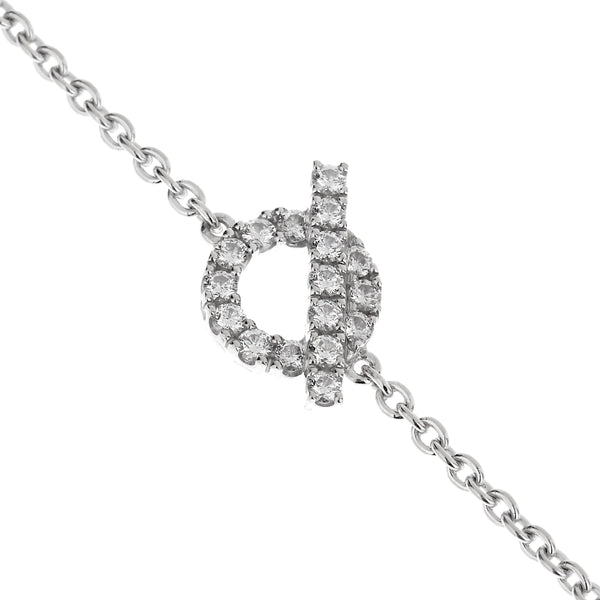
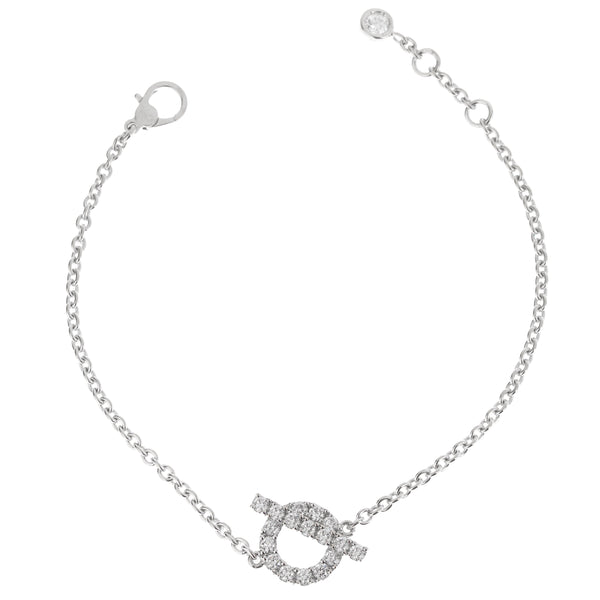

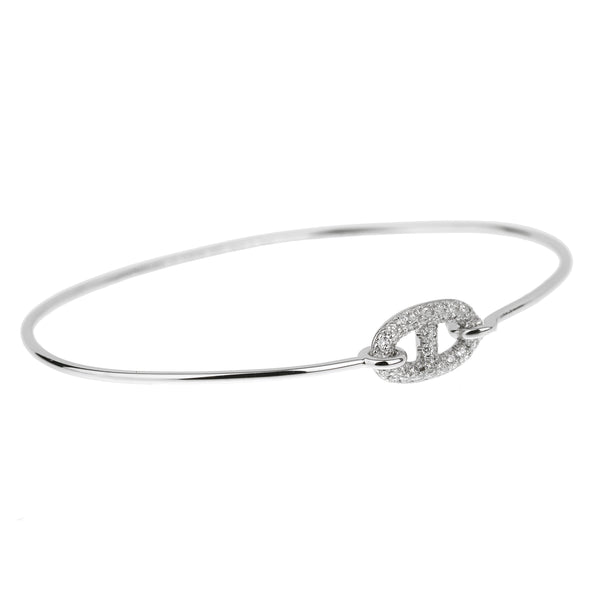
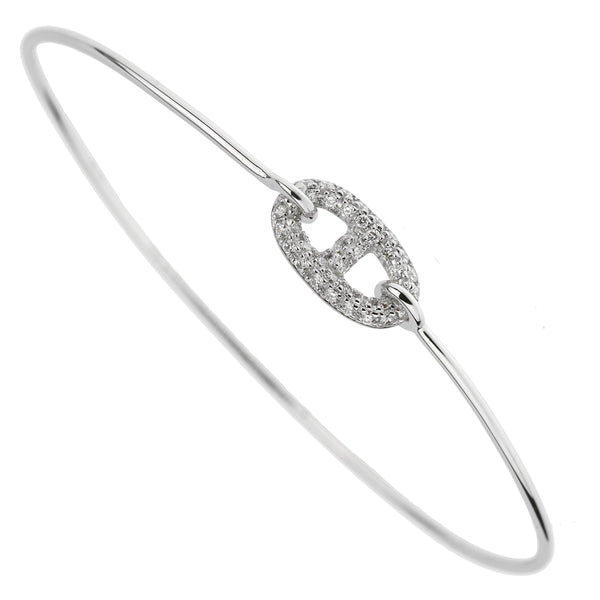


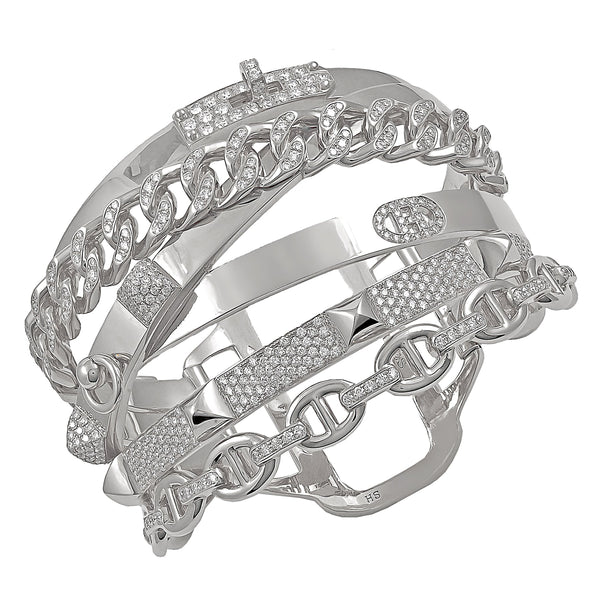

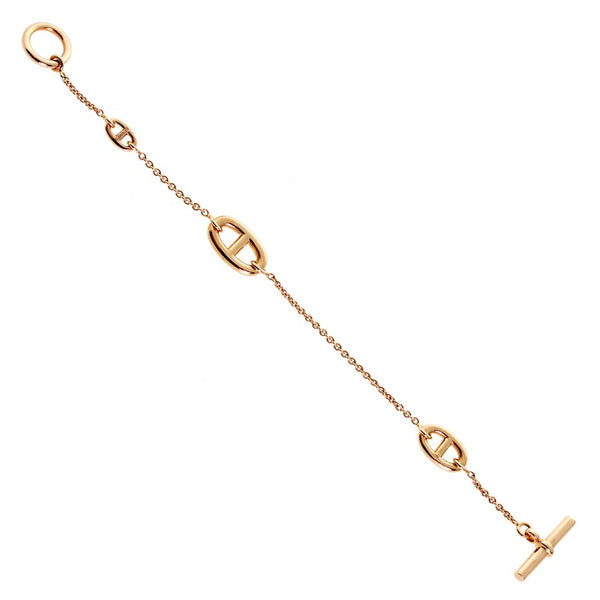
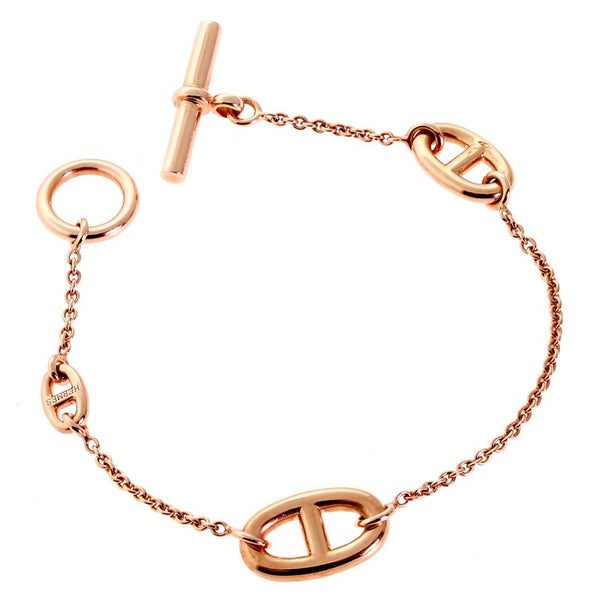


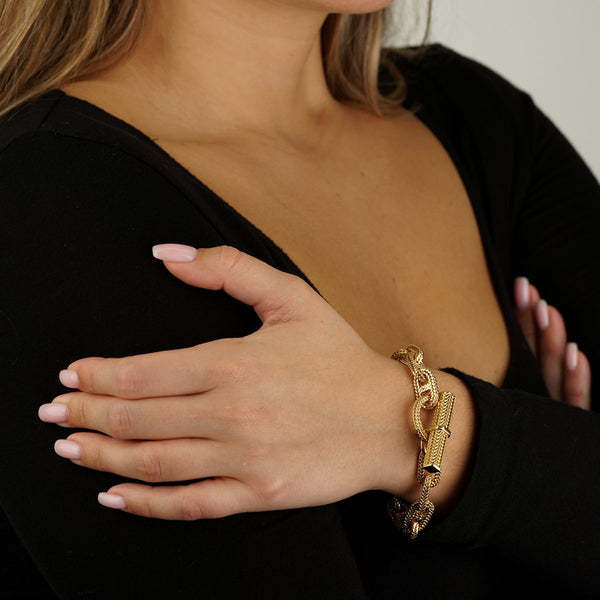




The Collier de Chien began as a dog collar. It became a bracelet in 1949, and it has not required a single revision since. That is what craft longevity looks like.
Opulent Jewelers — Authenticated Pre-Owned Hermès BraceletsPre-Owned Hermès Bracelets — The Deepest Category in the House
No other jewelry category captures the breadth of Hermès’s design intelligence quite like the bracelet. From the deliberately provocative to the quietly architectural, the house has built a bracelet range that spans nearly a century of design thinking without ever losing the thread back to where it started — a leather workshop in Paris and the world of the horse.
The Collier de Chien is the piece most associated with Hermès jewelry globally, and for good reason. A dog collar reimagined as a fine jewelry bracelet in 1949, with Médor pyramid studs, a central O-ring, and a turn-lock closure that hasn’t changed in seventy-five years. The Chaîne d’Ancre, designed by Robert Dumas in 1938 from the anchor chains of Normandy boats, approaches the wrist from an entirely different angle — nautical in origin, maritime in rhythm, consistently elegant in execution. The Kelly bracelet translates the hardware of the world’s most recognizable handbag into a fine jewelry format that is restrained where the CDC is assertive. Together they form a bracelet canon with few equals in the luxury market.
Our Hermès bracelet inventory is the most active category we carry from the house. Pieces are sourced from private estates and individual consignors, authenticated against Hermès’s specific construction and hallmark standards, and listed when they meet our criteria. Sizes, conditions, and metal types vary with what comes in.
Hermès Bracelet Styles in Our Collection
Collier de Chien
The bracelet that defines Hermès jewelry in the secondary market. A custom bulldog collar made in 1923 became a women’s belt in 1927 and a fine jewelry bracelet in 1949 — at which point the design was so resolved that no revision has been needed since. The Médor pyramid studs, the O-ring, and the turn-lock closure are produced in rose, white, and yellow gold, plain metal or set with diamonds in varying intensities from four-diamond understated to full-pavé statement. The CDC stacks well with the Kelly bracelet and the Chaîne d’Ancre, though it holds its own on a bare wrist just as confidently. The most liquid Hermès jewelry category on the secondary market.
Chaîne d’Ancre
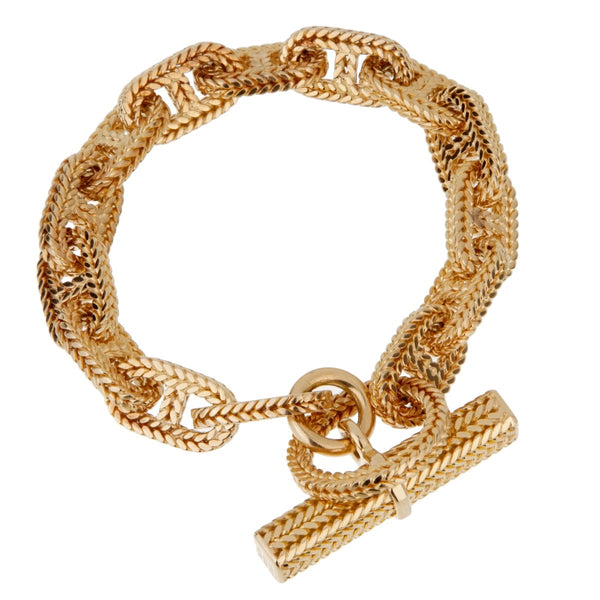
Robert Dumas designed the Chaîne d’Ancre in 1938, having observed the anchor chains used to moor boats in Normandy. The interlocking oval links — each one a stylized nautical anchor — have been in continuous production ever since and have spawned one of the most widely imitated motifs in fine jewelry. In authentic Hermès production, the links carry a characteristic weight, finish, and articulation that imitations consistently fail to replicate convincingly. Available in silver and 18-karat gold, in multiple link weights from delicate to substantial, with and without diamond accents.
Kelly Bracelet
Where the CDC is deliberate and structured, the Kelly bracelet is composed. The same fine jewelry construction, the same gold and diamond configurations, but the design focus shifts from pyramid studs to the elongated turn-lock clasp of the Kelly bag — a quieter reference that rewards recognition without demanding it. The Kelly and CDC are frequently stacked together precisely because their characters complement rather than compete. A white gold Kelly alongside a rose gold CDC is one of the most consistently photographed Hermès combinations in the collector community.
Galop d’Hermès & Filet de Selle
The house’s most direct return to its equestrian origins in bracelet form. The Filet de Selle was Hermès’s first jewelry piece in 1927, its links drawn from saddle girth straps. The Galop d’Hermès is a more recent collection — stirrup-shaped forms in gold and diamonds that wear as sculptural objects as much as jewelry. Both reward collectors who follow the design language back to its source rather than stopping at the surface of the motif.
Clic H & Enamel Bracelets
The most accessible entry point into Hermès jewelry and, category for category, one of the most collected objects the house makes across all product lines. Lacquered enamel in the full Hermès color spectrum, with a palladium-plated H-clasp that closes with a satisfying click. Not fine jewelry in the metallurgical sense, but a fully authentic Hermès piece with genuine collector value. Condition is decisive here — chips and crazing in the enamel affect resale significantly, and we grade every piece honestly before listing.
What We Verify on Every Hermès Bracelet
The Chaîne d’Ancre is among the most counterfeited fine jewelry motifs in the world. The CDC attracts imitation for the same reasons it attracts collectors — the design is specific enough to be recognizable and simple enough to approximate. We examine every bracelet in detail before it enters our inventory, with particular attention to the markers that fake pieces consistently fail.
The “Hermès” mark with the grave accent over the second “e” is the first verification point on every piece. It appears alongside the metal fineness stamp — 750 for 18-karat gold, 925 for silver — in a specific format that counterfeits routinely get wrong in placement, depth, or accent character.
Authentic Hermès bangles and rigid bracelets are oval, not round. This is one of the most reliable and most consistently failed authenticity markers for the CDC and Kelly formats. O-rings on CDC bracelets are perfectly smooth with no visible seam. Chaîne d’Ancre links are checked for correct weight, symmetry, and articulation.
CDC and Kelly turn-lock closures are examined for correct mechanism, fit, and finish. All hardware is firmly attached with no movement at connection points. Pyramid studs on CDC bracelets are assessed for correct proportions and surface finish — the angle and height of the Médor stud are characteristic and measurable.
CDC bracelets use animal leather with meticulous, evenly spaced stitching — stitching irregularity is a common tell in fakes. Clic H enamel is assessed for depth, surface integrity, and color consistency. Chips, crazing, and fading are graded and disclosed. We do not describe damaged enamel as acceptable condition.
Hermès Bracelets — What Buyers Ask
What is the difference between the Collier de Chien and the Kelly bracelet?
Both are produced in the same gold and diamond configurations and both are made to the same construction standard — the difference is entirely in character. The CDC is assertive: pyramid studs, O-ring, turn-lock closure, all inherited from the dog collar it started as in 1923. The Kelly is composed: the same quality of bracelet built around the elongated turn-lock clasp of the Kelly bag rather than hardware from a dog collar. Collectors who want presence choose the CDC. Those who want the same craft in a quieter register tend toward the Kelly. Many own both and wear them stacked. Browse our current Hermès bracelet inventory to see what is available now.
What sizes do Hermès bracelets come in?
The CDC and Kelly bracelets are produced in small, medium, and large models — the small model is the most popular and most collected size, the medium and large models are less common on the secondary market. Hermès measures bracelet sizes by interior circumference; the small model typically fits wrists up to approximately 15.5cm. Chaîne d’Ancre bracelets are sized by the number of links. We list the size and interior circumference of every bracelet we carry — if you are unsure of your size, measure your wrist and we can advise before you purchase.
Is the Clic H bracelet real Hermès?
Yes, fully. The Clic H is an authentic Hermès product, produced by the house and sold in Hermès boutiques. It is not fine jewelry in the metallurgical sense — the body is lacquered enamel over a base metal core with a palladium-plated clasp, not gold or silver — but it is a genuine Hermès piece with real collector value and a strong secondary market. It is also the most accessible price point in the Hermès bracelet range, which is part of why it is one of the house’s most collected objects globally.
How do I know a pre-owned Hermès bracelet is authentic?
The primary markers are the “Hermès” stamp with the correct grave accent, the metal fineness mark, and the oval (not round) shape of authentic Hermès bangles and rigid bracelets. For CDC pieces, O-rings should be seamless and smooth, stitching on leather straps should be perfectly even, and pyramid studs should have consistent height and angle. For Chaîne d’Ancre, link weight and articulation are the most reliable tells. Every bracelet we list has been examined against these criteria. If you have a specific piece to evaluate, contact us directly.
Do you buy or consign Hermès bracelets?
Yes — bracelets are the most active Hermès category we source. We purchase CDC, Kelly, Chaîne d’Ancre, Galop, and Clic H pieces outright and accept consignments. Condition matters considerably, particularly for enamel pieces and leather-strap CDC models where wear affects value. We evaluate honestly and price accordingly. Reach out through our consignment inquiry page to get started.